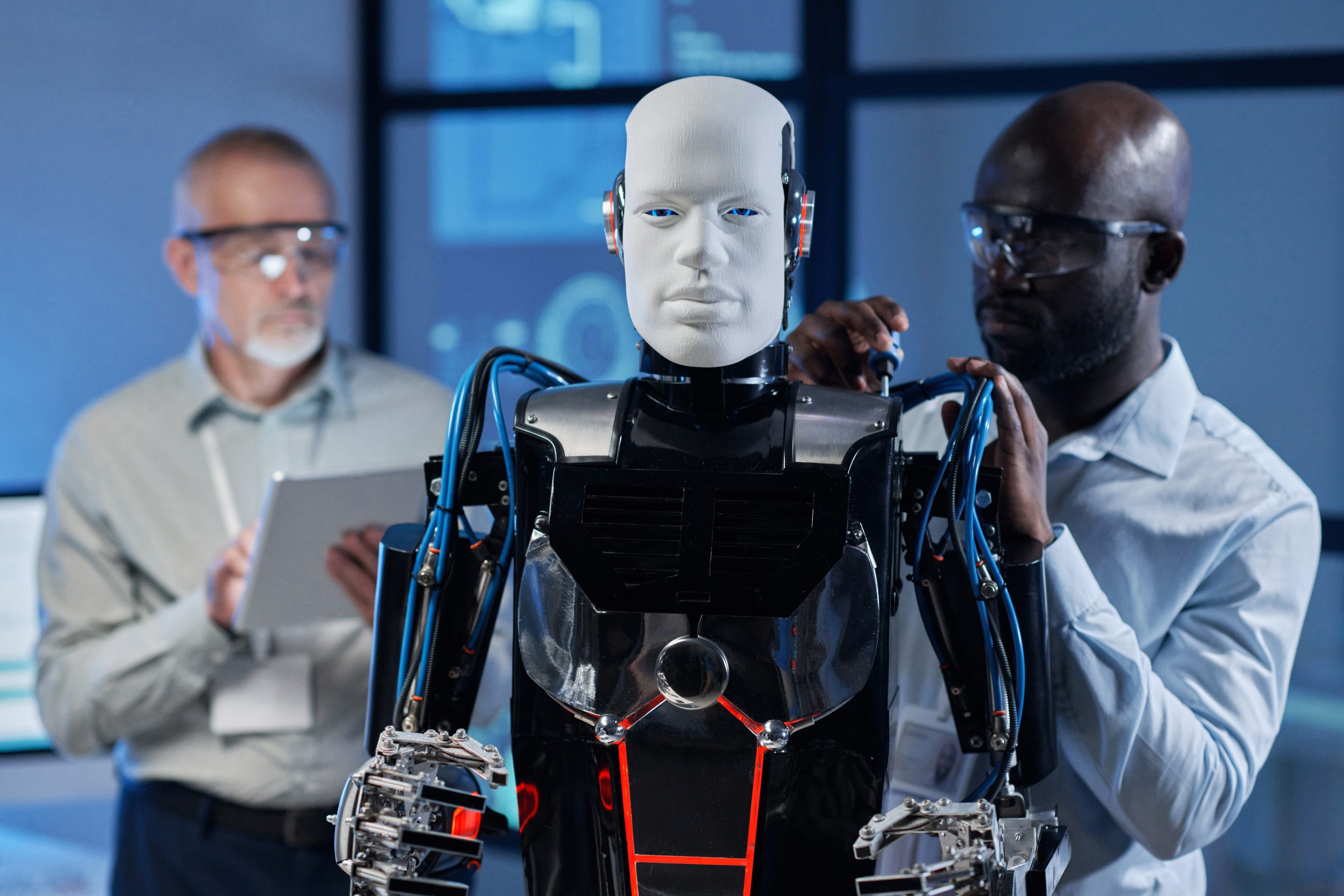
Why Startups Are “Hiring” AI Employees Instead of Buying More Software
For twenty years, the startup answer to “we need to get something done” was to buy software. A tool for email, a tool for support, a tool for analytics, a tool for the tool you bought last quarter. The average small company now pays for dozens of them, and most sit half used. In 2026, a different answer is catching on: AI employees.
Founders are not buying tools anymore. They are hiring them.
It sounds like marketing language, and plenty of it is. But underneath the noise there is a real change in how this software gets built and sold. A tool waits for you to operate it. You open it, you click, you get a result. An AI employee does the opposite. It works in the background, makes a judgment call, and comes back to you with something done, or with a recommendation and a reason.
What actually changed
Two things. Models got good enough at reasoning that they can hold a goal in mind and take steps toward it without a human clicking every button. And founders ran out of patience for software that adds work instead of removing it. A dashboard that shows you a problem is not the same as a coworker who fixes it. People have started to notice the difference, and they are voting with their wallets.
You can see it in how products are named now. Companies give their software human names, job titles, even personalities. It feels gimmicky until you use one and realise the framing is the whole point. You are not meant to learn the tool. You are meant to delegate to it.
Marketing is the obvious first job
The clearest example is marketing, because marketing for a small brand is mostly judgment calls made under uncertainty. What should I post. Which competitor move matters. Where is my ad budget leaking. Those are the exact tasks a junior marketer or an agency account manager used to handle, and they happen to be tasks current AI is genuinely good at.
A few products now ship this as the entire pitch. Torvio, built for ecommerce founders, frames itself as two AI staff rather than a feature list. One handles organic strategy and competitor intelligence, the other handles paid ads, and the founder wakes up to a short brief of what to do that day. Whether the staff metaphor charms you or annoys you, it captures the shift cleanly. The job is no longer “use our software.” It is “here is your morning briefing, go.” We saw the same logic play out when small DTC brands started walking away from marketing agencies.
Customer support went this way a year earlier, with agents that resolve tickets instead of routing them. Sales is next, with software that researches accounts and drafts outreach on its own. The pattern keeps repeating. Take a role that used to need a junior hire, and sell it as a hire.
Where the AI employee metaphor breaks
It would be dishonest to pretend this is finished. AI employees do not have judgment in the human sense. They have pattern recognition trained on public data, which makes them confident and occasionally wrong in ways a real employee would not be. They cannot own a relationship, sit through a hard meeting, or be accountable when something goes sideways. Treating them as a full replacement for senior people is how companies get burned.
The honest version of the pitch is narrower and more useful. For work that is repetitive, judgment-light, and was never going to get a dedicated human at a small company anyway, an AI employee beats both an expensive agency and a piece of software nobody opens. For work that needs a person who can be held responsible, it is an assistant at best.
What to watch
The real question is not whether AI employees replace staff. It is what happens to the software market underneath them. If founders start buying outcomes instead of tools, the dashboards and point solutions that have defined SaaS for two decades become plumbing, useful but invisible, sitting behind an agent that does the actual work. The companies that win the next few years will be the ones that work out which jobs people will hand over completely, and which they still want to do themselves.
For now, the smart move for a small team is simple. Look at the work nobody has time to do well. If a piece of software can do that job and report back, hire it. If it just shows you another chart, you already have plenty of those.