Etched AI Chip Startup Hits $5B Valuation With $1B in Sales — and It’s Just Getting Started
An AI chip startup called Etched has emerged from stealth with numbers that would have seemed implausible two years ago: $800 million raised, a $5 billion valuation, and $1 billion already booked in contract orders — before its chip has even shipped to customers at scale.
The company is building specialized AI inference chips designed to go head-to-head with Nvidia in the market for running AI models. And based on the investor names on its cap table, it has convinced some of the most credible people in tech and finance that it has a real shot.
What the Etched AI Chip Actually Does
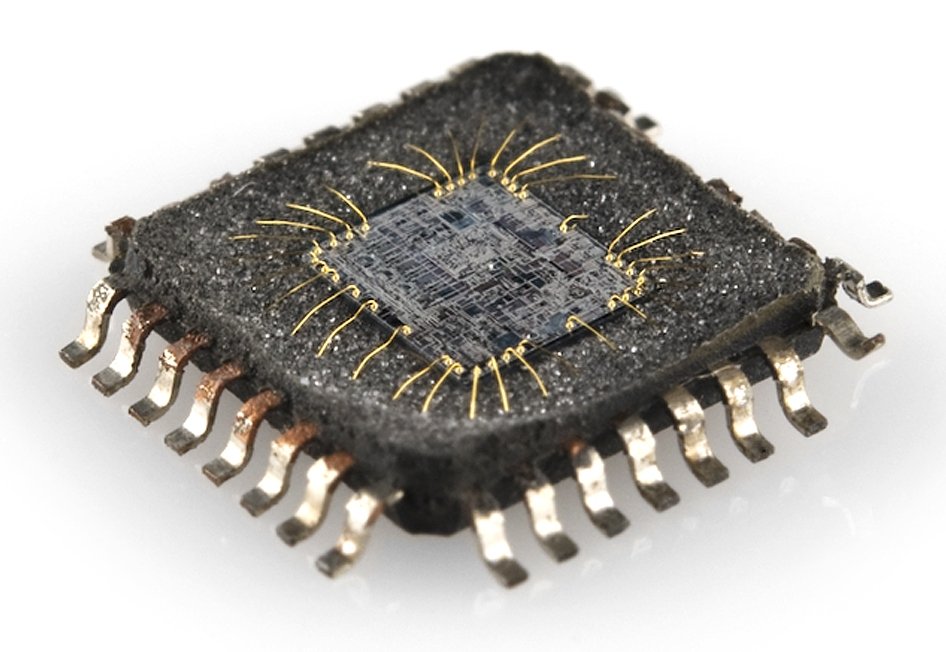
Etched’s product is built around what it calls “frontier inference clusters” — complete systems that bundle its chips with custom racks and software, all engineered to run inference faster, more cheaply, and more efficiently than what is currently available.
Inference is the part of AI that most people experience directly: it is what happens between the moment you type a prompt and the moment a response appears. Training a model is expensive and done once. Inference is done billions of times a day, for every user of every AI product. That makes it the biggest ongoing cost center in the AI industry — and the biggest opportunity for anyone who can do it better.
Etched’s chip, manufactured by TSMC, is designed from the ground up for transformer-based AI models, the architecture that powers ChatGPT, Claude, Gemini, and essentially every other major language model in use today. By building hardware specifically optimized for that architecture rather than trying to make a general-purpose GPU do everything, Etched claims it can deliver meaningfully better performance and efficiency per dollar.
The Funding Story: From Almost Out of Cash to $800M
The Etched founding story has the shape of a classic startup fable. CEO Gavin Uberti and president Robert Wachen met at Harvard, dropped out to pursue the Thiel Fellowship, and founded the company in 2022 with a thesis that AI would eventually need chips built specifically for it — not general-purpose GPUs that happen to work well for AI workloads.
In 2023, that argument was a hard sell. Every major investor they pitched passed. The company was reportedly operating month-to-month at one point, close to running out of cash. The 30-page memo they had written arguing for specialized AI silicon failed to move the room.
By 2024, the market had caught up with their thesis. Etched raised more than $125 million that year as investor appetite for AI hardware exploded. Then in December 2025, the company closed a $500 million round led by Stripes at a $5 billion post-money valuation — an announcement it sat on until now.
The Investors: A Who’s Who of AI and Finance
The investor roster Etched has assembled is striking. On the institutional side, the $500 million round was led by Stripes, with participation from VentureTech Alliance, Jane Street, Hudson River Trading, Two Sigma, and Ribbit Capital — a mix of long-term growth investors and quantitative trading firms that understand the value of computational edge.
The angel list is even more notable. Andrej Karpathy, the former Tesla AI director and OpenAI founding member, is in. So is Geoffrey Hinton, the pioneering deep learning researcher who won the Nobel Prize in Physics in 2024 and has since become one of the most prominent voices on AI risk. Fei-Fei Li, the Stanford AI professor and former Google Cloud AI head, is also an investor. So are Arthur Mensch, the CEO of Mistral AI, and Scott Wu, the CEO of Cognition.
On the billionaire side, Stanley Druckenmiller and Peter Thiel have both backed the company. Thiel’s fingerprints are already on the founding story through the Thiel Fellowship, which Uberti and Wachen both received.
The Market Etched Is Entering
The AI chip market is moving fast. Nvidia remains dominant, but the landscape is shifting. Cerebras went public in May 2026 in what was one of the year’s biggest tech IPOs. Groq, another inference chip specialist, raised $650 million in June. OpenAI just announced its first custom chip built with Broadcom. And the hyperscalers — Amazon, Google, and Microsoft — all have in-house silicon programs of their own.
What all of this activity points to is a market that has concluded Nvidia’s general-purpose GPUs, while powerful, are not the only answer to the AI compute problem. Different workloads benefit from different hardware architectures. Inference, in particular, has different requirements from training — and companies that can build chips optimized specifically for inference have a real addressable market.
Etched is betting that frontier inference is the right beachhead. The companies running the largest AI models at the largest scale are the ones with the most to gain from better inference chips — and the most to spend on hardware that delivers real improvements.
Where Things Stand Now
As of now, Etched’s chips are in customer testing. The $1 billion in booked contracts represents committed orders, not revenue already recognized. The company still needs to deliver its systems at the performance levels it has promised, pass real-world validation with customers, and scale manufacturing through TSMC.
Those are not trivial challenges. The history of semiconductor startups is full of companies that raised large sums, signed contracts, and then struggled to deliver chips that performed as advertised in production conditions. Etched will need to execute cleanly from here to turn its booked sales into shipped product and its valuation into a sustainable business.
But the starting position is strong. The team has deep technical credibility, the funding runway to see through a challenging product launch, and a cap table full of people who understand both the technology and the market dynamics.
Final Thoughts
Etched’s emergence from stealth is a reminder of how dramatically the AI hardware landscape has changed in two years. A company that struggled to get investors to return its calls in 2023 is now valued at $5 billion with $1 billion in orders and backing from some of the most respected names in technology and finance.
The AI inference market is real, it is large, and it is growing. Whether Etched becomes one of the defining companies in that market will depend on what happens next — but it has earned its place in the conversation.
Read more tech related articles here.