SpaceX Picks Qualcomm to Power Starlink Mobile 5G Network
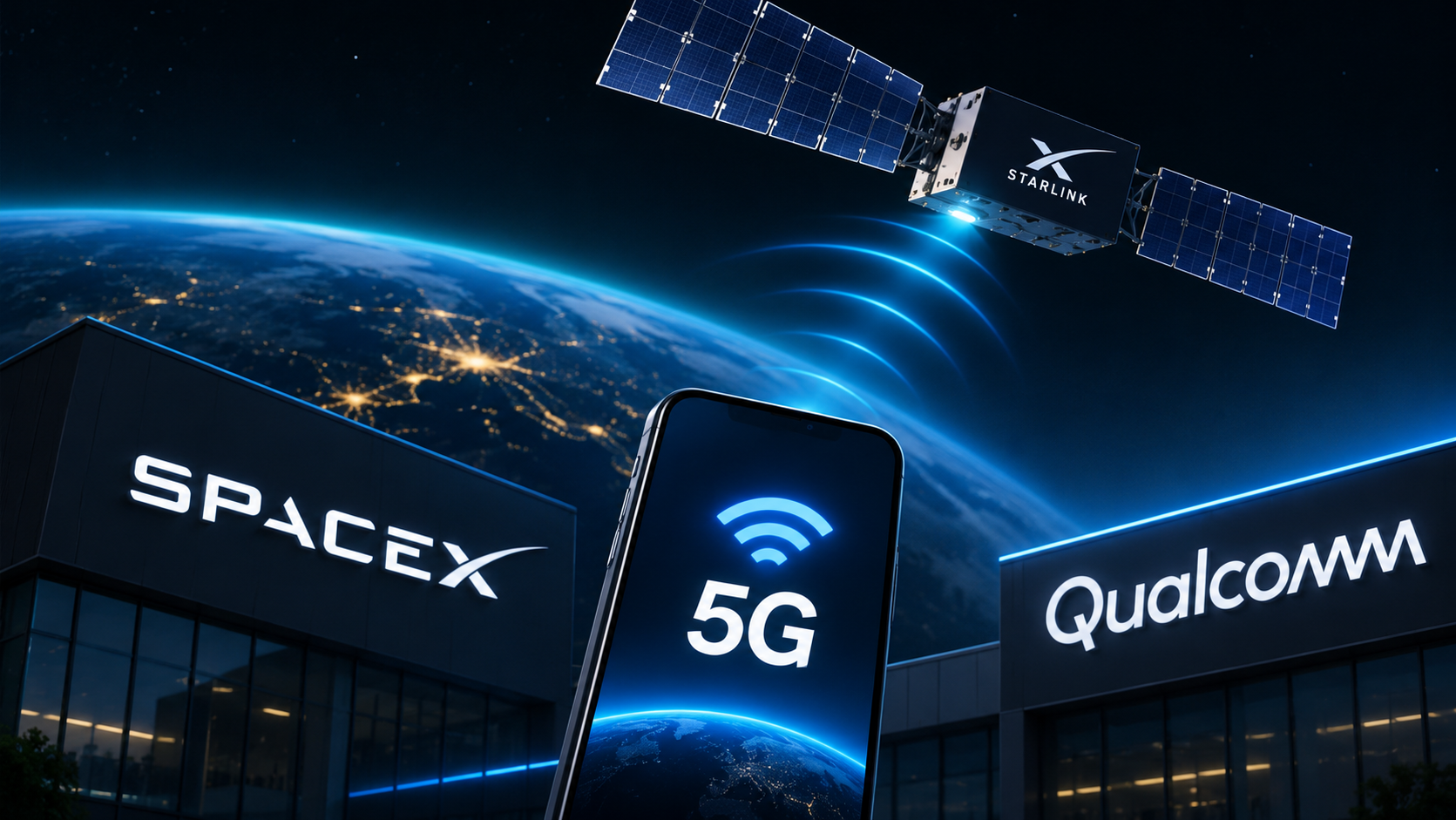
SpaceX has chosen Qualcomm to supply the technology for its Starlink Mobile 5G network. The network will be built on the ground across the United States, with rollout planned to begin in 2027. The deal was announced on November 4, 2026. It is the clearest sign yet that Elon Musk’s space company plans to become a full mobile carrier, competing with AT&T, T-Mobile and Verizon.
Under the multi-year agreement, Starlink will put Qualcomm hardware and software across “tens of thousands” of cell sites. This adds ground-based coverage to the satellite network that already made Starlink a household name.
What Qualcomm Is Supplying for Starlink Mobile 5G
According to Qualcomm’s official announcement, SpaceX picked the company’s Dragonwing Cellular Infrastructure platforms. Two chips are central to the deal:
- Dragonwing QRU100: handles processing inside the radio units mounted on towers.
- Dragonwing QDU100: handles latency-sensitive Layer 1 processing in the distributed units.
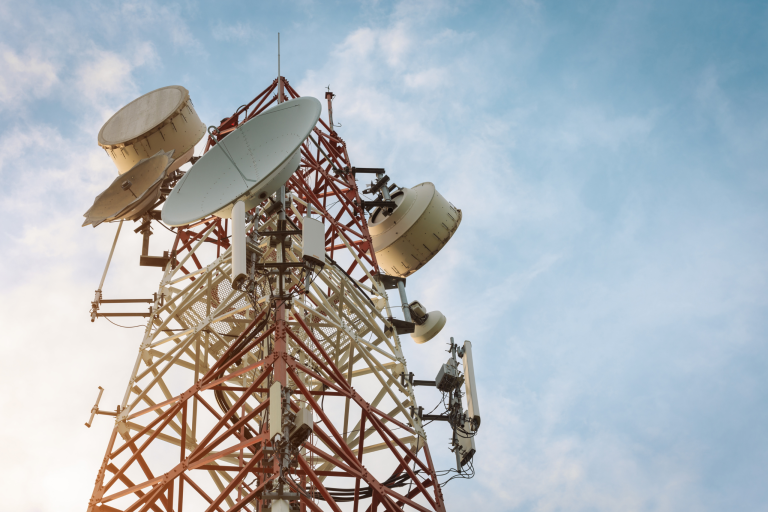
Qualcomm will also provide commercial-grade physical layer software. Starlink Mobile will use massive MIMO radios with 64 transmit and 64 receive paths, known as 64T64R. This technology uses many antennas to serve more users at once from a single site.
Michael Nicolls, Starlink’s Senior Vice President, said “Starlink is building the first fully-integrated nationwide satellite and terrestrial network.” Qualcomm’s Durga Malladi said a nationwide network “demands high performance and power efficiency at every site.”
Qualcomm also presented the deal as a foundation for future AI-native 6G networks. The current project, however, is focused on 5G.
Why SpaceX Wants Its Own Ground Network
Starlink already runs a direct-to-cell satellite service that connects ordinary smartphones in areas with no tower coverage. Techwey previously covered how T-Mobile opened its Starlink beta to AT&T and Verizon users. Satellites alone, though, struggle to deliver the capacity needed in busy cities and inside buildings.
That is where ground towers come in. Ian Fogg, research director at CCS Insight, said in a note quoted by Via Satellite that he expects Starlink to “use its satellite coverage to deliver national network reach.” He also expects it to rely on terrestrial 5G sites in urban areas. In his view, this hybrid model could also appeal to new mobile operators in other countries.
There is also a business reason. Yahoo Finance reports that AT&T, T-Mobile and Verizon reportedly turned down SpaceX’s requests to rent capacity on their networks as a mobile virtual network operator (MVNO). Building its own towers lets SpaceX avoid depending on rivals.
The Spectrum Behind the Plan
A mobile network is only as strong as its spectrum. In September 2025, SpaceX agreed to buy AWS-4 and H-block spectrum from EchoStar for about $17 billion. The deal was split equally between cash and SpaceX stock.
SpaceX says its 2 GHz mid-band spectrum will carry high-bandwidth traffic, and that newly acquired low-band spectrum will act as a coverage layer to help signals reach indoors. The Washington Post has also reported that SpaceX is in talks with EchoStar about operating through its Boost Mobile brand. No deal has been confirmed.
What Analysts Are Watching
Industry watchers see promise but also real hurdles. Speaking to RCR Wireless News, Michael Thelander of SRG Research noted that SpaceX’s spectrum holdings remain limited. He added that massive MIMO “doesn’t increase peak data speeds although it can go a long ways toward increasing network capacity.”
Thelander also compared the challenge to Dish’s 5G network, which struggled with coverage before its mobile ambitions were scaled back. He said SpaceX may still need an MVNO arrangement to offer coverage everywhere, and that it must find a clear way to stand apart from the three incumbents.
Leonard Lee of neXt Curve said SpaceX appears to be moving toward “some form of Open RAN architecture.” This approach mixes hardware and software from different suppliers instead of relying on one vendor. Qualcomm has long backed Open RAN, so the Starlink deal could help scale its network chip business.
RCR Wireless also reports that SpaceX is negotiating with US tower companies for access to at least 80,000 cell sites. SpaceX has not disclosed how many sites each rollout phase will include.
What This Means for Mobile Users
For American consumers, a fourth facilities-based carrier with satellite backup built in could mean more competition and fewer dead zones. Pricing, launch dates and subscriber targets have not been announced.
For markets like Nigeria and the rest of Africa, the hybrid satellite and terrestrial model is worth watching. Starlink is already reshaping connectivity on the continent, as explored in our look at how satellite internet in Africa is changing in 2026. If the US rollout works, a similar model could reach regions where building towers alone has never made financial sense.
For Qualcomm, the deal is one of its biggest wins in network infrastructure. Its most notable earlier deployments were with Viettel in Vietnam and NTT Docomo in Japan.
The Bottom Line
The Qualcomm partnership moves Starlink Mobile 5G from ambition toward reality. The hardware is chosen, the spectrum is being built up and the rollout clock starts in 2027. Building a national network has humbled well-funded players before, so the next two years will show whether SpaceX can do on the ground what it has done in orbit. To understand why 5G infrastructure matters this much, read our explainer on why 5G technology is a game-changer.