Smart Glasses: Why AI Eyewear Is Finally Going Mainstream
Remember when Google Glass flopped spectacularly in 2013? Well, smart glasses are back—and this time, they’re actually cool. The smart glasses market exploded by 210% in 2024, and 2025 is shaping up to be the year AI-powered eyewear finally goes mainstream.
If you’ve been skeptical about strapping technology to your face, 2025 might change your mind. Meta’s Ray-Ban smart glasses are selling out faster than retailers can restock them, and the newly launched Display version with its $799 price tag is already generating waitlists. But what’s driving this sudden surge in smart glasses adoption?
The Technology Finally Caught Up
The difference between 2025’s smart glasses and their clunky predecessors comes down to three breakthrough innovations that make these devices genuinely useful rather than just gimmicky.
AI That Actually Understands What You’re Seeing
The game-changer is computer vision combined with conversational AI. With Meta Ray-Ban Display glasses, you can simply look at a restaurant menu in Spanish and ask “Hey Meta, what does this say?” The AI instantly translates it and displays the answer directly in your field of vision.
This isn’t just translation. The AI can identify plants, provide cooking instructions based on ingredients in your fridge, or explain architectural details about buildings you’re walking past. It’s like having a knowledgeable friend who sees exactly what you see—except this friend never gets tired of your questions.
Gesture Control That Feels Like Magic
Perhaps the most impressive innovation is the Meta Neural Band—a slim wristband that interprets muscle signals from your wrist. Instead of awkwardly swiping at your temples or shouting voice commands in public, you can navigate menus, answer messages, and control media with subtle thumb movements that nobody around you even notices.
This electromyography (EMG) technology reads the electrical signals your muscles produce when you move your fingers, translating tiny gestures into precise controls. Want to skip to the next song? Just pinch your thumb and index finger together. Need to scroll through navigation directions? Swipe your thumb left or right. It’s intuitive, discreet, and frankly feels a bit like having superpowers.
Displays That Don’t Make You Look Ridiculous
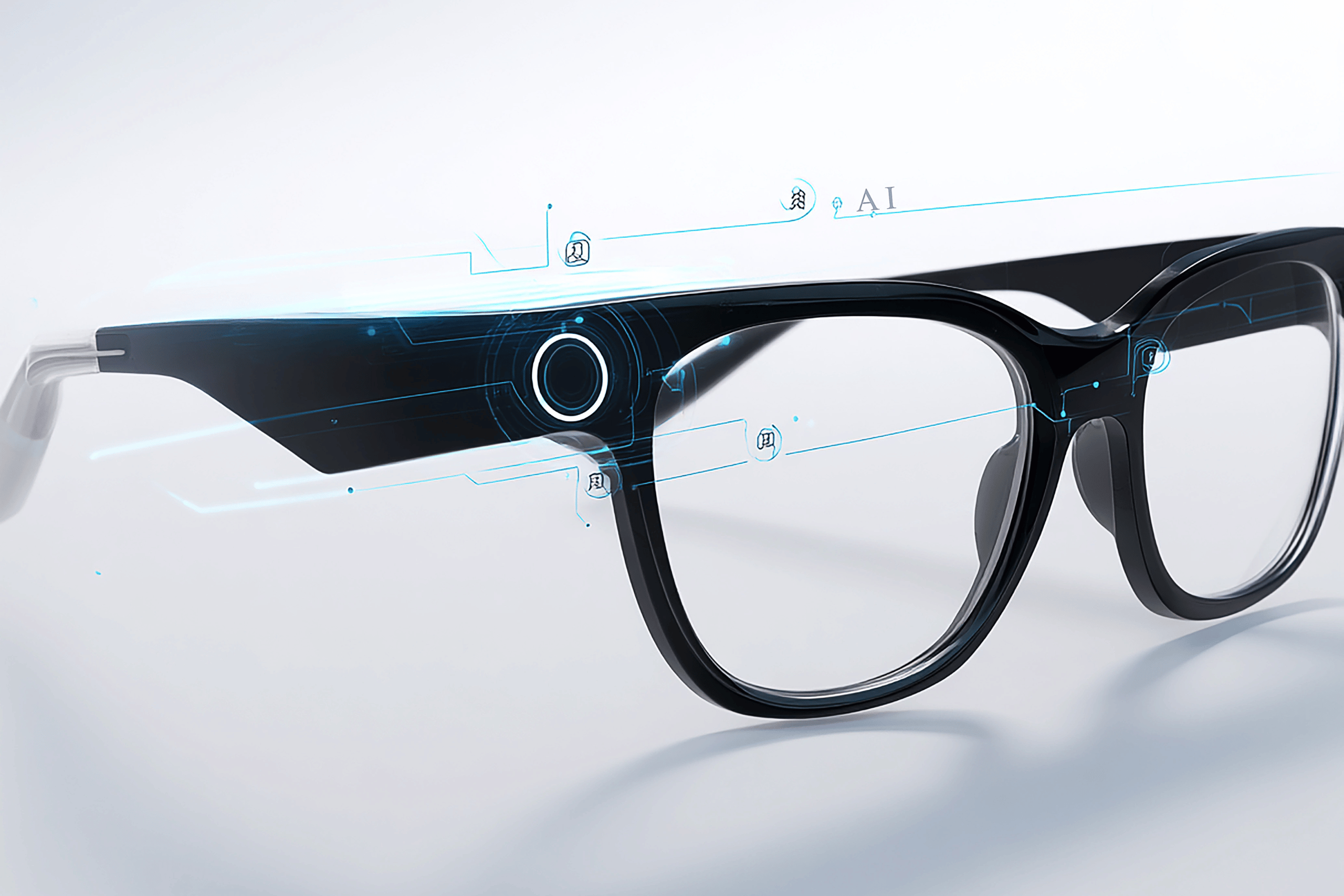
Early smart glasses suffered from visible, distracting displays that screamed “I’m wearing tech on my face!” The 2025 Meta Ray-Ban Display fixes this with a small, full-color screen integrated into the right lens that’s completely invisible when not in use.
The display offers 600×600 pixel resolution with brightness up to 5,000 nits—bright enough to read in direct sunlight. More importantly, it’s positioned off to the side of your vision, so it doesn’t obstruct your view of the real world. When you need information, a quick glance reveals messages, navigation, or AI responses. When you don’t, it disappears completely.
What Makes Smart Glasses Useful in 2025
The real test of any technology is whether it solves actual problems people face daily. Smart glasses 2025 are passing this test by addressing specific pain points.
Hands-Free Everything
The most immediately apparent benefit is genuine hands-free functionality. According to Meta, users can now handle messages, calls, navigation, music control, and photography without ever reaching for their phones.
Cooking dinner and need to convert measurements? Ask while your hands are covered in flour. Exploring a new city and need directions? Get turn-by-turn navigation without constantly checking your phone. Capturing moments at a concert? Record videos without holding up a device that blocks your view (and everyone else’s).
Real-Time Information Without Phone Checking
We check our phones an average of 96 times per day. Smart glasses reduce this compulsion by delivering time-sensitive information exactly when you need it, displayed right in your line of sight.
Waiting for an important message? It appears in your glasses the moment it arrives. Following a recipe? Instructions display as you cook. Traveling abroad? Live translation helps you navigate foreign languages seamlessly. This “just in time” information delivery reduces the constant phone-checking habit while keeping you connected.
Photography That Captures What You’re Actually Experiencing
Smartphone photography has a fundamental flaw—you experience the moment through a screen instead of living it. Smart glasses solve this by letting you capture photos and videos from your actual perspective while staying present.
The 12MP ultra-wide camera on the latest Ray-Ban Meta glasses records 3K video at 60fps with HDR support. The Oakley Meta Vanguard—designed for athletes—features a 122-degree wide-angle lens with adjustable stabilization, perfect for action shots while biking, running, or skiing.
The Privacy Question Everyone’s Asking
Let’s address the elephant in the room: privacy concerns have plagued smart glasses since Google Glass’s controversial debut. How are 2025’s smart glasses different?
First, all Meta smart glasses include a visible LED indicator that lights up whenever the camera is recording. Unlike smartphones that can secretly record, smart glasses provide clear visual feedback to people around you.
Second, privacy regulations have evolved significantly since 2013. Meta’s glasses include automatic content moderation, data encryption, and user controls over what information is stored or shared. Users can delete recorded content at any time, and voice data used for AI queries isn’t stored permanently.
That said, societal norms around smart glasses are still developing. Some establishments prohibit them entirely, while others are establishing guidelines for appropriate use. The technology is advancing faster than social etiquette, creating an adjustment period we’re all navigating together.
Who’s Actually Buying Smart Glasses?
The 210% market growth in 2024 wasn’t driven by tech enthusiasts alone. Smart glasses are finding surprising adoption across diverse user groups.
Fitness enthusiasts love the hands-free workout tracking and music control. Oakley Meta glasses integrate with Strava and Garmin, letting runners and cyclists track performance without wrist-checking interrupting their form.
Travelers appreciate real-time translation and navigation features that make exploring foreign countries significantly easier. Live translation supports French, Italian, Spanish, and English, with more languages rolling out throughout 2025.
Content creators use the first-person perspective recording to capture authentic, immersive content. The ability to record hands-free while demonstrating crafts, cooking, or other activities has made smart glasses popular among YouTubers and TikTok creators.
Professionals in fields like architecture, real estate, and field service use smart glasses for visual documentation and remote collaboration. The ability to share what you’re seeing during video calls creates new possibilities for remote expertise.
The Competition Is Heating Up
While Meta dominates the current smart glasses market, competition is intensifying. IDC forecasts that AR/VR headsets and smart glasses shipments will increase 39.2% in 2025 to 14.3 million units, attracting new players to the space.
Xreal’s Project Aura promises even lighter frames with extended battery life. Snap’s AR glasses target younger demographics with heavy social media integration. Apple’s Vision Pro, while technically a headset rather than glasses, demonstrates Apple’s interest in wearable visual computing.
Traditional eyewear companies are also entering the market. Luxottica’s partnership with Meta proved successful enough that other optical retailers are exploring similar collaborations with tech companies.
What’s Coming Next
The smart glasses roadmap for late 2025 and 2026 reveals even more ambitious features on the horizon.
Expanded AI capabilities will include continuous visual context awareness, allowing AI assistants to remember what you’ve seen and reference it later. Imagine asking “What was the name of that restaurant we passed an hour ago?” and getting an instant answer.
Social media integration is deepening. Instagram Reels support launches in 2026, bringing content consumption directly to your glasses. You’ll be able to watch friends’ stories and scroll through your feed without touching your phone.
Improved navigation will extend beyond pedestrian directions to include indoor mapping for malls, airports, and museums. Visual arrows will overlay the real world, pointing you exactly where to go.
Health monitoring features are in development, with rumors suggesting future models could track eye strain, measure UV exposure, and even provide vision correction adjustments throughout the day.
Should You Buy Smart Glasses in 2025?
Whether smart glasses make sense for you depends on your lifestyle and use cases. They’re particularly valuable if you:
- Spend significant time traveling and need navigation/translation
- Create content and want authentic first-person perspective footage
- Exercise regularly and prefer hands-free music and tracking
- Constantly juggle tasks where hands-free information access helps
- Experience FOMO but want to reduce phone checking behavior
However, smart glasses might not be worth it if you:
- Rarely wear glasses and find them uncomfortable
- Work in environments where recording devices are prohibited
- Prefer minimal tech integration in daily life
- Need all-day battery life (current models last 6-8 hours of mixed use)
The Smart Glasses Market Projections
Industry analysts project the smart glasses market will reach $15 billion by 2027, growing at a 60% compound annual growth rate. This explosive growth reflects several converging trends:
Battery technology improvements enable all-day wear in smaller form factors. Display miniaturization allows higher-resolution screens in standard eyewear frames. AI models become powerful enough to run locally on glasses without constant cloud connectivity. And perhaps most importantly, society is becoming more comfortable with wearable cameras and recording devices.
The Bottom Line
Smart glasses failed a decade ago because the technology wasn’t ready and society wasn’t prepared. In 2025, both problems are solved. The hardware is genuinely useful, the AI is impressively capable, and social acceptance is growing as more people discover the benefits.
At $379 for standard Ray-Ban Meta glasses or $799 for the Display version, these devices are no longer experimental tech for early adopters—they’re practical tools that enhance daily life in meaningful ways.
The question isn’t whether smart glasses will go mainstream. Looking at the adoption curve, they already are. The real question is which features will prove most valuable as this technology matures, and how our relationship with ambient computing will evolve as AI-powered eyewear becomes as common as smartphones.
Smart glasses 2025 represent the first consumer wearable that successfully balances fashion, function, and social acceptability. Whether you’re ready to embrace them or prefer to wait and see, one thing is clear: the future of computing isn’t just in your pocket—it’s right before your eyes.