Meta AMD Chip Deal: $60 Billion for 6 Gigawatts of AI GPUs
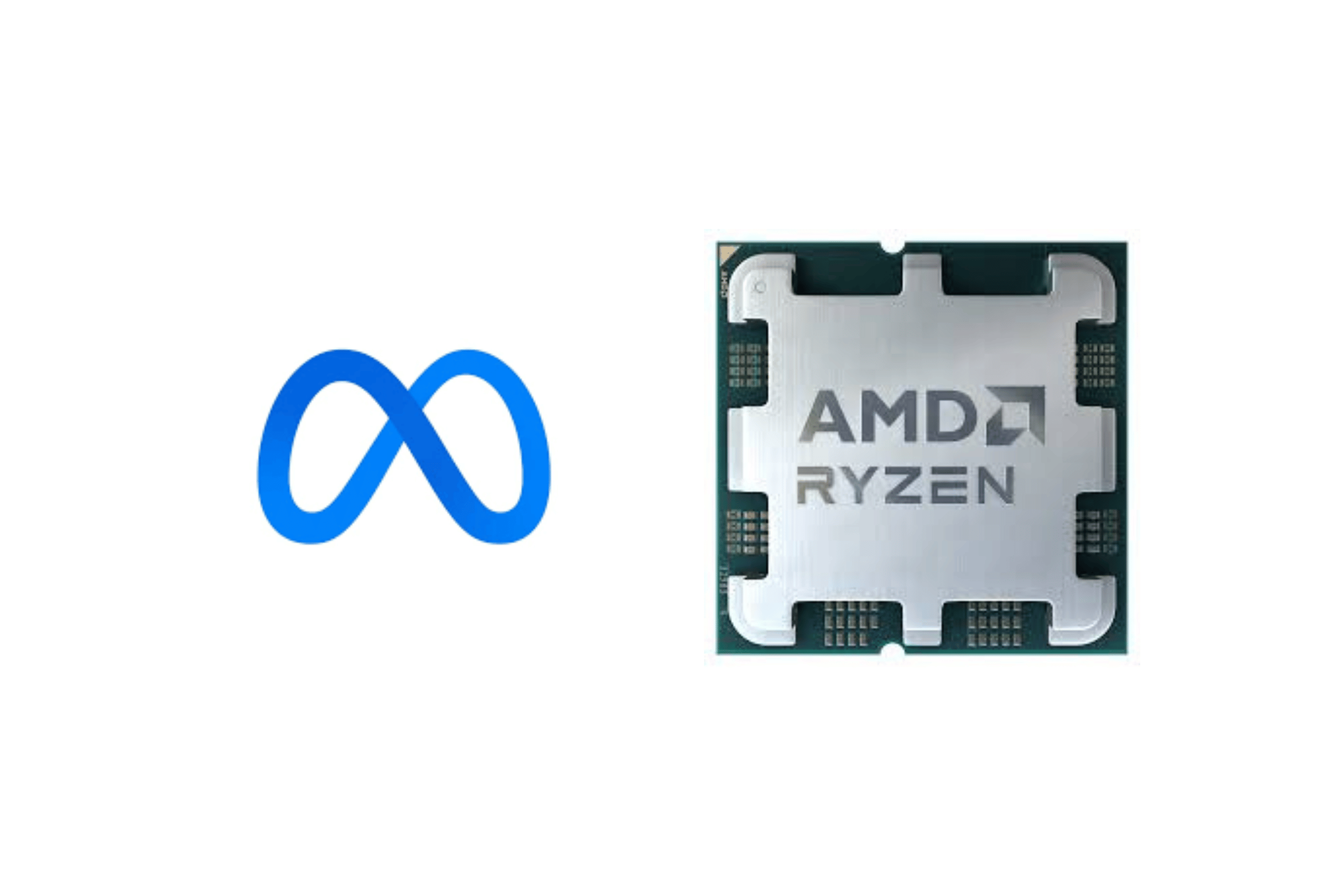
Meta and AMD announced a landmark $60 billion chip deal on February 24 that gives Meta access to 6 gigawatts of AI computing power while potentially granting the social media giant up to 10% ownership in the chipmaker. The agreement marks AMD’s second major AI customer win following its OpenAI partnership last year.
Breaking Down the $60 Billion Deal
The five-year agreement centers on AMD supplying its Instinct GPUs and EPYC CPUs to power Meta’s massive AI infrastructure expansion. According to Reuters, the first gigawatt deployment begins in the second half with AMD’s new MI450 GPUs, custom-designed specifically for Meta’s workloads.
AMD CEO Lisa Su confirmed the company will deliver six gigawatts total across multiple chip generations. For context, each gigawatt translates to “double-digit billions” in revenue for AMD, according to CNBC.
The 10% Equity Stake Structure
The most unusual aspect of the Meta AMD chip deal is the performance-based warrant allowing Meta to acquire up to 160 million AMD shares—roughly 10% of the company—at just one cent per share. According to TechCrunch, vesting occurs in tranches tied to GPU shipment milestones.
The warrant structure requires AMD’s stock price to hit $600 for Meta to receive the final tranche. AMD closed at $213.84 on Tuesday, up 8.8% after the announcement. This equity component signals deep long-term commitment from both companies but also suggests AMD needed sweeteners to secure such massive commitments.
Why Meta Needs AMD
Meta’s motivation is straightforward: diversification. The company has committed to up to $135 billion in capital expenditures this year as it races to build AI infrastructure matching competitors like Microsoft, Google, and Amazon.
According to Jon Peddie Research, Meta doesn’t want all its AI eggs in Nvidia’s basket. Days before the AMD announcement, Meta confirmed a separate multiyear deal for millions of Nvidia GPUs and CPUs. The dual-vendor strategy protects Meta against supply constraints and gives negotiating leverage.
Meta infrastructure head Santosh Janardhan stated the company’s data center buildout demands multiple chip vendors in parallel. With AI infrastructure spending exceeding $600 billion across major tech companies this year, securing guaranteed supply became critical.
What AMD Gains
For AMD, the Meta deal provides rare long-term revenue visibility in a cyclical industry. Chip analyst Ben Bajarin of Creative Strategies told CNBC that a key differentiator versus Nvidia is AMD offering customized GPUs optimized specifically for Meta’s workloads.
The MI450 architecture powering the first gigawatt deployment was co-engineered with Meta, targeting inference workloads that serve trained AI models to users. According to AMD’s press release, the chips will run on AMD’s Helios rack-scale architecture developed jointly with Meta through the Open Compute Project.
AMD stock jumped 8.8% on the news, closing at $213.84. Despite the rally, AMD shares remain down about 4% year-to-date following a disappointing Q1 forecast earlier this month that missed analyst expectations.
Market Reaction and Analysis
Wall Street views the Meta AMD chip deal as validation for AMD’s AI strategy. According to INDmoney, 78% of analysts recommend buying AMD stock, with an average target price of $286.30—representing 25% upside from current levels.
However, not everyone sees the equity stake as positive. Hargreaves Lansdown analyst Matt Britzman told Reuters: “AMD having to give up a 10% stake suggests struggles with organic demand.” The warrant structure implies AMD couldn’t secure such massive commitments without significant concessions.
Nvidia remains the dominant player with roughly 90% market share in AI chips and a $4.66 trillion valuation compared to AMD’s $320 billion. Nvidia reports earnings Wednesday, with analysts expecting $66 billion in revenue—more than six times AMD’s quarterly sales.
Meta’s Broader AI Strategy
The chip deal connects to Meta’s evolving AI positioning. Forrester analyst Alvin Nguyen characterizes Meta’s current strategy as shifting from competing directly with OpenAI and Anthropic on frontier models toward hosting third-party AI infrastructure.
Meta is building a $27 billion data center campus in Louisiana and recently announced a $10 billion gas-powered facility in Indiana designed for 1 gigawatt of compute capacity. The company’s AI ambitions center on what CEO Mark Zuckerberg calls “personal superintelligence”—bringing advanced AI capabilities to billions of users across Facebook, Instagram, and WhatsApp.
What This Means for the AI Chip Market
The Meta AMD chip deal signals several important market shifts. First, hyperscale customers are demanding vendor diversity to avoid single-source dependency. Second, customization is becoming a key differentiator as standardized chips struggle to meet specific workload requirements. Third, strategic partnerships now include equity components tying suppliers and customers together financially.
For startups and smaller companies, the mega-deals between tech giants and chipmakers create both challenges and opportunities. Supply constraints may worsen as major customers lock in multi-year commitments. However, the demand for inference-optimized chips, specialized accelerators, and alternative architectures creates openings for innovative companies.
Looking Ahead
The first MI450 GPU shipments begin in the second half, with subsequent chip generations following across the five-year agreement. AMD CFO Jean Hu expects “substantial multi-year revenue growth” from the partnership.
However, execution risk remains. AMD must deliver customized chips on schedule, maintain competitive performance against Nvidia, and hit the milestones triggering warrant vesting. Meta must deploy 6 gigawatts of computing infrastructure—a massive logistical and operational challenge even for a company with Meta’s resources.
The Meta AMD chip deal also raises questions about circular transactions. With both Meta and OpenAI holding equity stakes in AMD, industry analysts wonder about the implications for competition and pricing dynamics in the AI chip market.
For now, the deal represents a major win for AMD as it challenges Nvidia’s dominance. Whether that translates to sustainable market share gains depends on execution over the next five years.
Read more tech related content here.