
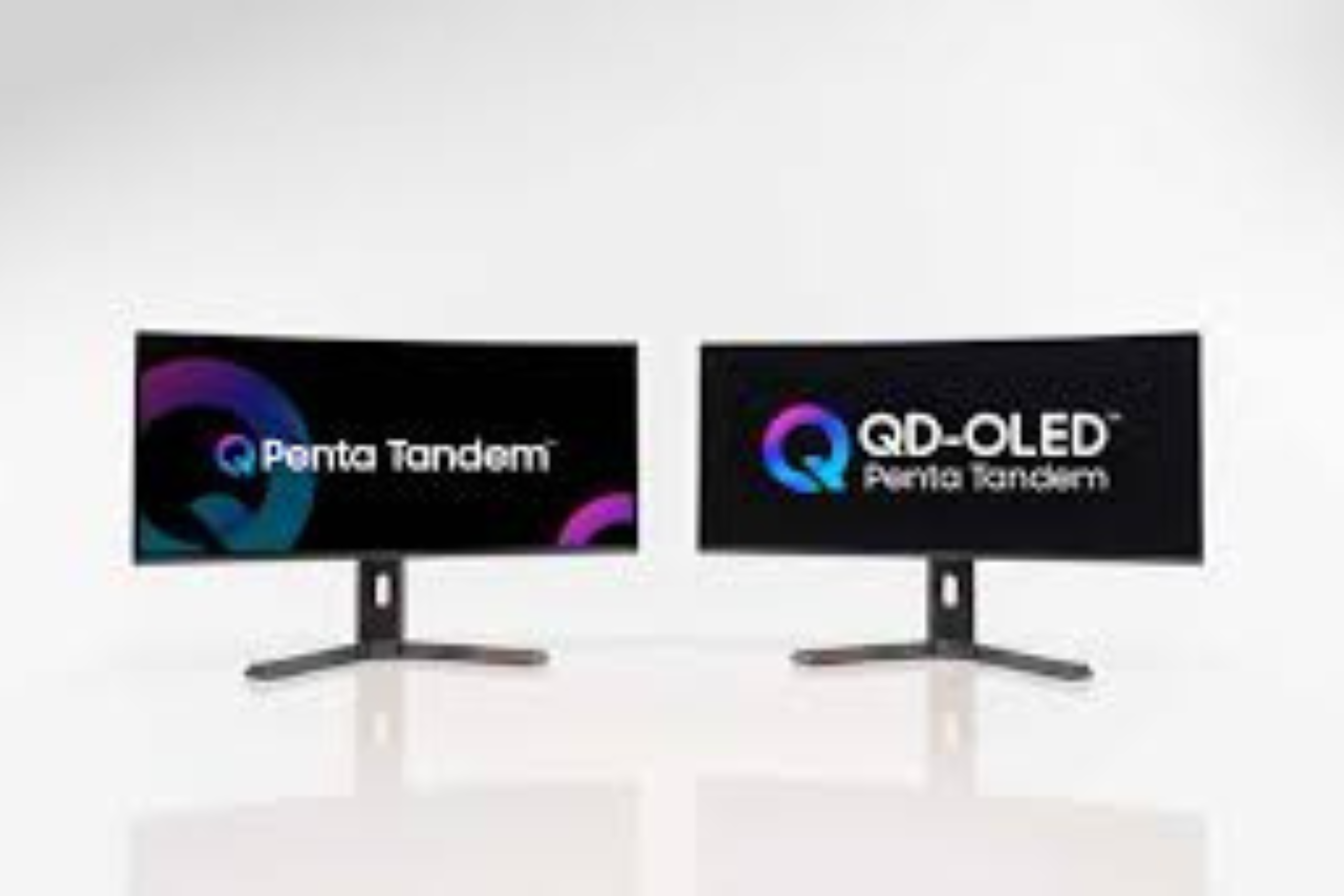
Samsung Penta Tandem OLED Technology: 30% Brighter Displays With Double the Lifespan
Samsung Display has officially branded its latest display innovation as Samsung Penta Tandem OLED, marking a significant advancement in monitor and TV technology. The five-layer organic light-emitting structure delivers 30% better luminance efficiency and doubles the lifespan compared to previous OLED generations, addressing two of the technology’s biggest historical weaknesses.
What Makes Samsung Penta Tandem OLED Different
The Samsung Penta Tandem OLED technology uses five layers of organic light-emitting material instead of the four layers in previous panels. According to Samsung Display, “Penta” comes from the Greek word for five, reflecting the core architectural innovation.
By distributing energy across an additional layer, the Samsung Penta Tandem OLED structure achieves higher brightness at the same power consumption or maintains brightness while using less power. Samsung likens it to “five people carrying a load that was previously carried by four”—either endurance increases or heavier loads become manageable.
For monitors, panels featuring Samsung Penta Tandem OLED reach peak brightness of 1,300 nits on a 3% window. TVs using the technology hit an impressive 4,500 nits under the same testing conditions. These brightness levels compete directly with LG Display’s Tandem WOLED technology.
Display Performance and Certifications
The Samsung Penta Tandem OLED technology enables displays to achieve VESA’s DisplayHDR True Black 500 certification. According to Tom’s Hardware, this certification requires maintaining black levels of 0.0005 nits or lower while simultaneously reaching peak luminance of 500 nits.
Currently, Samsung Display’s 31.5-inch UHD monitor is the only display in its size category certified with DisplayHDR True Black 500. The achievement demonstrates the technology’s ability to balance deep blacks with high peak brightness—a historically difficult challenge for self-emissive displays.
High Pixel Density Achievement
One major breakthrough enabled by Samsung Penta Tandem OLED is high-resolution compact displays. Samsung Display’s 27-inch UHD panel achieves 160 pixels per inch—the highest density among self-emissive gaming monitors.
According to NotebookCheck, Samsung Display remains the only company mass-producing 27-inch 4K self-emissive displays. Competing OLED panels from manufacturers like LG Display are limited to QHD resolution at this screen size.
Managing heat and efficiency at such high pixel densities requires advanced engineering. The five-layer structure of Samsung Penta Tandem OLED distributes thermal load more effectively than four-layer predecessors, enabling these high-density configurations without compromising lifespan or brightness.
Where You’ll Find Samsung Penta Tandem OLED
The technology isn’t entirely new—it debuted in gaming monitors throughout 2025 under the label “five-layer Tandem OLED with EL 3.0 technology.” According to PC Gamer, monitors like the MSI MPG 272URX and Asus ROG Swift PG27UCDM already use Samsung Penta Tandem OLED panels, though they weren’t marketed under that brand name initially.
Samsung Display announced it will expand the technology across its full range of panel sizes in 2026. The roadmap includes 27-inch UHD, 31.5-inch UHD, 34-inch ultrawide WQHD, and a new 49-inch Dual QHD (5,120 x 1,440) model.
For TVs, Samsung Penta Tandem OLED has featured in top-tier self-emissive display lineups from major customers since 2025, though specific TV models using the technology weren’t disclosed in Samsung’s announcement.
Lifespan Improvements Address Burn-In Concerns
One of the most significant claims around Samsung Penta Tandem OLED is doubled lifespan compared to previous generations. According to Android Headlines, long-term testing of earlier Samsung QD-OLED monitors showed decent burn-in resistance. If the new generation truly doubles durability, screen degradation may become essentially a non-issue for typical users.
Burn-in—permanent image retention caused by static elements displayed for extended periods—has historically been OLED’s Achilles heel. By improving lifespan and reducing the risk of pixel degradation, Samsung Penta Tandem OLED technology makes the panels more practical for productivity use where static interface elements appear constantly.
How Samsung Penta Tandem OLED Compares to LG
Samsung and LG Display take different approaches to OLED technology. According to SamMobile, LG uses white OLED (WOLED) with color filters, while Samsung employs quantum dots with a blue base layer.
LG’s Tandem WOLED also uses multiple layers to improve brightness and lifespan, making the competition between Samsung Penta Tandem OLED and LG Tandem WOLED particularly interesting. Both technologies address similar weaknesses through different engineering approaches.
The quantum dot approach in Samsung Penta Tandem OLED panels theoretically delivers better color volume—the range of colors a display can produce at varying brightness levels. However, real-world performance differences between the competing technologies remain subtle and depend heavily on specific implementations.
Pricing and Availability
Samsung Display hasn’t announced pricing for Samsung Penta Tandem OLED panels directly, but monitors using the technology are already available. According to industry reports, 27-inch 4K models with the new panels retail between $800-1,200 depending on features like refresh rate and additional gaming functionality.
The technology’s rollout across more panel sizes throughout 2026 should bring Samsung Penta Tandem OLED to various price points. Budget-conscious buyers might see the technology in mid-range monitors by late 2026, though premium gaming monitors will likely remain the primary application.
For TV buyers, sets using Samsung Penta Tandem OLED technology carry premium pricing befitting flagship models. Exact pricing varies by manufacturer and screen size, but expect these panels in the highest-tier offerings from brands partnering with Samsung Display.
What This Means for Consumers
The Samsung Penta Tandem OLED technology makes OLED displays more practical for diverse use cases. Doubled lifespan reduces concerns about burn-in for productivity users. Higher brightness improves performance in well-lit rooms. Better efficiency means lower power consumption for similar brightness levels.
For gamers, the combination of high refresh rates (up to 360Hz in some implementations), perfect blacks, instant response times, and now improved brightness and durability makes Samsung Penta Tandem OLED panels compelling choices. The technology addresses previous OLED weaknesses without sacrificing the advantages that made OLED attractive initially.
Content creators benefit from the high pixel density 27-inch 4K panels, getting accurate color representation and ample screen real estate in a compact form factor. The DisplayHDR True Black 500 certification ensures these displays can handle HDR content properly.
According to GadgetMatch, Samsung Display plans to supply Samsung Penta Tandem OLED across flagship product lines from major customers, suggesting wide availability across brands rather than Samsung exclusivity.
The technology represents meaningful progress in making OLED practical for mainstream use beyond early adopters willing to accept tradeoffs. As production scales and costs decrease, Samsung Penta Tandem OLED could become the standard for premium displays across monitors and TVs.
Read more tech related articles here.