Red Light Therapy: What the Science Actually Says
Red light therapy went from a fringe biohacker thing to a mainstream product in under five years. LED face masks are on shelves at Sephora, Target, and Amazon now. Dermatologists recommend them. Beauty influencers won’t shut up about them.
But once you clear away the marketing and the glowing before-and-after photos, there’s a fair question left: what does the science actually say?
We dug through the peer-reviewed research, not the blog posts and not the brand-funded white papers, to figure out what red light therapy really does in your skin, which claims hold up, and which ones are still wishful thinking.
What is photobiomodulation, really?
Red light therapy has a proper name: photobiomodulation, or PBM. And the mechanism is actually pretty well understood. When certain wavelengths of light hit your skin, they get absorbed by a protein called cytochrome c oxidase inside your mitochondria. That protein sits in the electron transport chain, the process your cells use to make ATP, the little energy molecule that powers just about everything your cells do.
When cytochrome c oxidase soaks up red and near-infrared light, it lets go of nitric oxide (which had been gumming up the works) and lets the mitochondria crank out ATP more efficiently. Downstream, you get more collagen, less inflammation, and faster tissue repair.
This isn’t hand-waving, either. A 2014 paper in Seminars in Cutaneous Medicine and Surgery went through more than 40 clinical trials and concluded that photobiomodulation “has a solid scientific basis” for skin treatments. A 2019 review in the Journal of Clinical and Aesthetic Dermatology backed that up specifically for skin rejuvenation.
Which wavelengths actually do something?
Not all light is equal here. The effect depends almost entirely on the wavelength, which is really just the color and energy of the light hitting your skin.
Red light (620 to 660nm) is the most studied range for skin. Light around 630nm reaches the epidermis and upper dermis and nudges your fibroblasts to make collagen. Plenty of studies have shown better fine lines, smoother texture, and an improved complexion with regular use.
Near-infrared (810 to 850nm) goes deeper, down into the lower dermis and even the tissue below it. This is the range tied to calming inflammation and deeper repair. A 2013 study in Photomedicine and Laser Surgery found that 830nm light noticeably cut inflammation markers in treated skin.
Blue light (400 to 420nm) works in a totally different way. It targets porphyrins made by Cutibacterium acnes, the bacteria behind inflammatory acne. When those porphyrins absorb blue light, they kick out reactive oxygen species that kill the bacteria. A landmark 2000 study in the British Journal of Dermatology saw a 76% drop in inflammatory acne lesions over 12 weeks.
Orange light (590 to 620nm) is less studied than red or blue, but early research hints at help with evening out skin tone and mild pigmentation. The evidence is still thin, though.
What the clinical data actually backs up
Based on the research we have right now, here’s where red light therapy stands on solid ground.
Collagen and anti-aging. A 2014 controlled trial in Photomedicine and Laser Surgery ran 113 people through 611 to 650nm and 570 to 850nm light twice a week for 30 sessions. They came out with, in the study’s words, “significantly improved skin complexion and skin feeling,” measurably smoother skin, and denser collagen on ultrasound.
Acne. The case for blue light against acne is especially strong. A bunch of randomized trials show real drops in inflammatory breakouts with steady blue light use.
Wound healing and inflammation. Near-infrared has been used in clinics for wound healing for decades. The mechanism, fewer inflammatory signals and more fibroblast activity, is well documented.
What it does not have strong evidence for. Weight loss, hair regrowth (some early hints, nothing conclusive), cellulite, or “detox.” If a gadget promises any of that, raise an eyebrow.
Do the home gadgets actually pack enough punch?
This is the real question. Clinical studies use medical-grade machines with carefully dialed-in power (measured in milliwatts per square centimeter). The consumer masks you buy are weaker than that.
But the research suggests lower power can still work if you make up for it with longer or more frequent sessions. A 2018 review pointed out there’s a biphasic dose response: too little light does nothing, the right amount helps, and too much can actually backfire and slow your cells down. Consumer masks with a decent number of LEDs and the right wavelengths land inside that helpful window for home use.
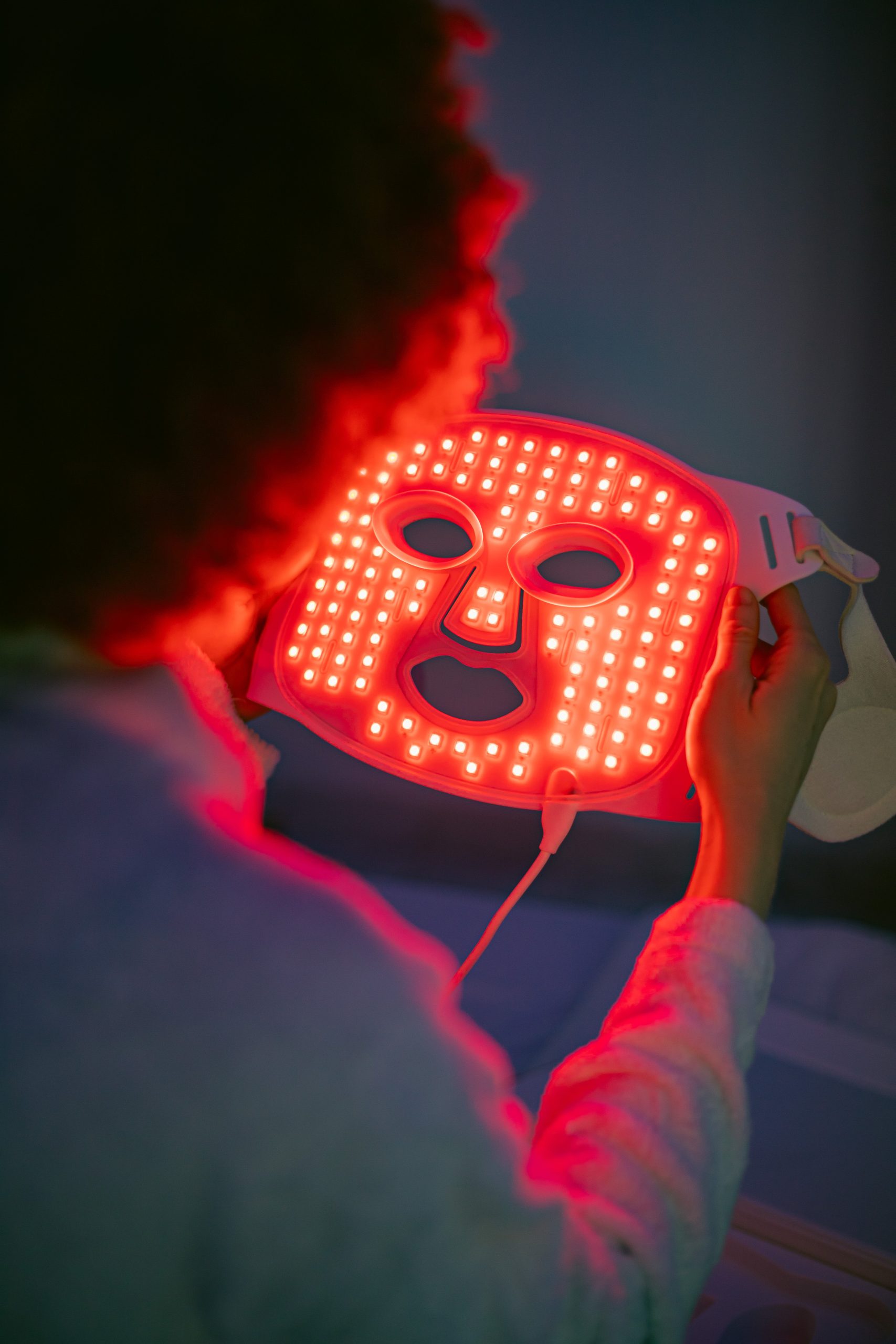
So what should you look for in a mask? The number of LEDs (more means more even coverage), the actual wavelengths on offer (630nm red and 850nm near-infrared at a minimum), and whether the thing is FDA-registered. Masks with four wavelength modes, the ones that cover red, blue, near-infrared, and orange, give you the most flexibility for tackling more than one skin issue.
If you want a practical, spec-by-spec breakdown before you buy, the LED face mask buying guide on SkinTekie’s blog walks through the technical bits worth comparing across brands.
Is red light therapy worth it?
Red light therapy is one of the few beauty technologies with a real evidence base behind it. We understand how it works. The clinical results hold up. And the safety record is excellent, with side effects that are basically nonexistent at the power levels home devices use.
The trick is keeping your expectations in line with what the research supports: smoother texture, fewer fine lines, and clearer skin over weeks of steady use. It’s not a miracle. It’s a well-understood biological process that, used properly, gives you real, measurable improvements.
Which, honestly, is more than most beauty products can promise.
The studies referenced here are available in peer-reviewed journals indexed on PubMed. Techwey doesn’t take payment for editorial recommendations.