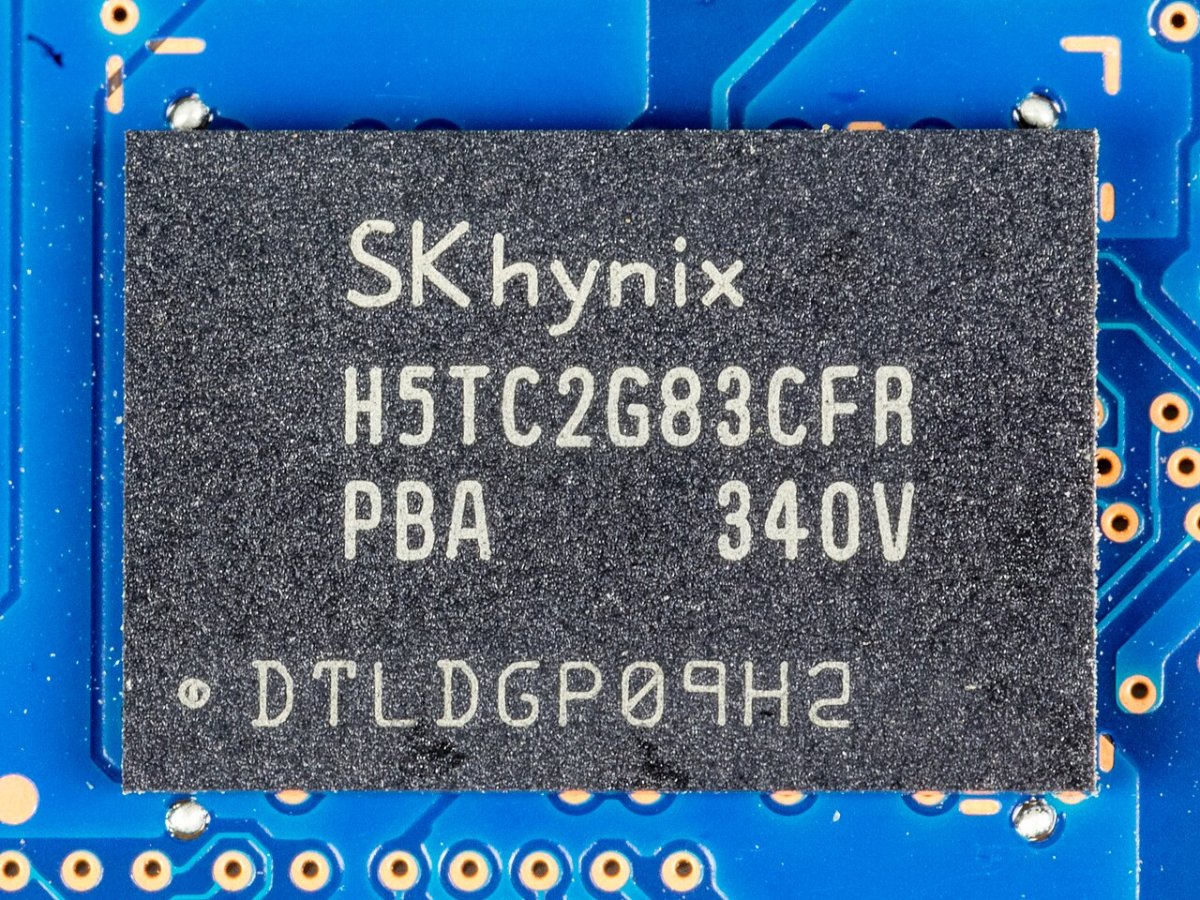
SK Hynix Raises $26.5 Billion in the Biggest Foreign IPO in US History
The AI chip boom just rewrote Wall Street history. SK Hynix, the South Korean memory chip giant, has raised $26.5 billion (KRW 40 trillion) in its US market debut — the largest IPO ever by a non-American company on US markets. The deal beats out Alibaba’s $25 billion IPO in 2014, which had held the record for over a decade.
SK Hynix sold 177.9 million American depositary shares (ADRs) at $149 each. The ADR structure lets US investors buy in at roughly a tenth of what a full share costs on the Seoul stock exchange. The offering was more than seven times oversubscribed, and the stock opened 14% above its IPO price on its first day of trading, Friday, July 10, 2026, on the Nasdaq under the temporary ticker SKHYV. Regular trading begins Monday, July 13, under the permanent ticker SKHY.
Why AI Is Behind This Record-Breaking Demand
SK Hynix isn’t just any chip company. It is one of the world’s primary producers of high-bandwidth memory (HBM) — the specialized memory stacked directly onto AI processors that makes modern large-scale AI possible. Nvidia, the company at the center of the AI chip boom, relies on SK Hynix as one of its primary HBM suppliers.
That relationship has made SK Hynix one of the biggest indirect beneficiaries of the AI spending wave sweeping through big tech. As companies like Google, Microsoft, Meta, and Amazon pour hundreds of billions into AI infrastructure, demand for the memory chips inside those systems keeps climbing.
Investors clearly see the opportunity. Even though Korean companies have historically traded at a discount to global peers — a gap analysts call the “Korea Discount” — SK Hynix priced its US shares at a 2.7% premium to its own three-day average back home in Seoul. US investors did not hesitate.
What SK Hynix Plans to Do With the Money
According to its Korea Stock Exchange filing, the $26.5 billion raised will be deployed across three priorities:
- A new semiconductor fabrication plant (fab) in South Korea — currently under construction to address the worldwide memory shortage driven by AI demand.
- A new advanced packaging facility in South Korea — where chips are prepared and assembled before being shipped to customers like Nvidia.
- EUV scanners — the next-generation lithography machines needed to manufacture chips at the most advanced process nodes.
The US Government Wants More Chip Fabs on American Soil
The timing of SK Hynix’s Wall Street debut has not gone unnoticed in Washington. US Commerce Secretary Howard Lutnick used a Micron event on July 9 to send a clear message: he is already in talks with both SK Hynix and Samsung about building new memory chip factories inside the United States. The goal, per Bloomberg, is to reduce America’s dependence on South Korea for this critical technology.
US chipmaker Micron — SK Hynix’s biggest American competitor — has already committed to the cause. Micron announced plans to invest $250 billion in new US manufacturing, a commitment it says will create more than 90,000 jobs and anchor leading-edge chip production on American soil.
The pressure on SK Hynix and Samsung to follow suit is significant. Both Korean chipmakers had already pledged more than $550 billion for new manufacturing in South Korea just weeks earlier. Whether they will now also commit to US-based production remains an open question — but the political signals from Washington are unmistakable.
What This Moment Signals for the AI Chip Race
SK Hynix’s record-breaking IPO is more than a financial milestone. It is a signal of just how central memory chips have become to the AI economy. As AI models grow larger and more powerful, the demand for HBM is set to keep rising — and the companies that make it are increasingly being treated as strategic national assets.
For investors, the SK Hynix IPO is a bet that the AI infrastructure buildout is far from over. For governments, it is a reminder that the semiconductor supply chain is a geopolitical battleground as much as a business one.
Read more tech related articles here.