SpaceX IPO Prices Tonight. Here’s What to Watch When It Opens Tomorrow.
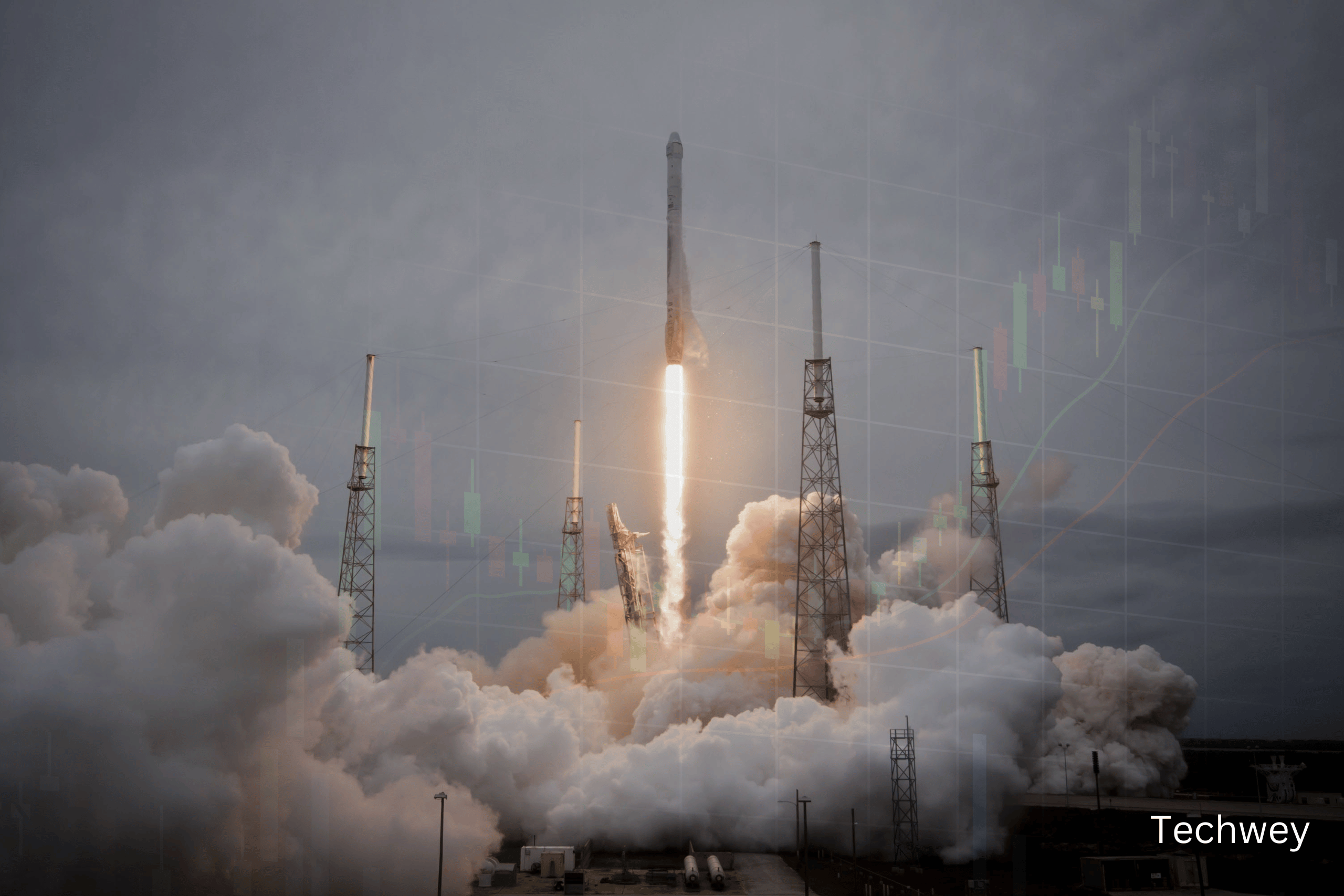
Tonight, after the market closes, SpaceX officially prices its IPO at $135 per share. That values the company at $1.77 trillion and raises $75 billion — the largest stock market debut in history. Trading begins on Nasdaq tomorrow, June 12, under the ticker SPCX.
The deal is already over twice oversubscribed, with more than $10 billion in verified institutional orders. MSCI has confirmed it will include SPCX in its Global Standard Indexes — including the MSCI World and MSCI ACWI — from the first day of trading. That means billions in automatic buy orders from passive index funds at the open.
But behind the hype is a real company with real financials. Here’s what the S-1 actually shows.
What the S-1 Financials Actually Say
SpaceX generated $18.7 billion in revenue in 2025, up 33% from $14.1 billion the year before. That’s strong growth for a company this size. But it posted a net loss of $4.94 billion on a GAAP basis — largely because of $12.7 billion in capital expenditure tied to the xAI acquisition and Starship development.
The company has three business segments. Only two are profitable.
Starlink (Connectivity): $11.4 billion in revenue and $4.4 billion in operating profit. This is the engine of the company. It’s growing fast, it’s profitable, and it’s the primary reason institutional investors are buying in.
Space (Launch services): The commercial Falcon 9 business remains in profit. Reliable, established, near-monopoly on reusable rocket launches.
AI (xAI): $3.2 billion in revenue but a $6.4 billion operating loss. The xAI segment is the most speculative part of the business — and the part that contributes most to the headline net loss. We covered the full SpaceX IPO story here when the filing was announced.
The Valuation Question
At $1.77 trillion, SpaceX trades at roughly 109 to 116 times its 2025 trailing revenue. That’s a multiple normally reserved for early-stage software companies — not a capital-intensive aerospace business.
The bull case is straightforward: Starlink is just getting started. It currently has around 5 million subscribers. The total addressable market for global satellite internet — including underserved regions in Africa, Southeast Asia, and rural markets worldwide — is vastly larger. If Starlink scales to 50 or 100 million subscribers, the revenue and profit picture changes dramatically.
The valuation isn’t a bet on what SpaceX is today. It’s a bet on what Starlink becomes over the next decade.
The bear case is just as simple: the xAI segment is losing billions, cumulative group losses stand at $41.3 billion, and Elon Musk holds approximately 79% voting control. Minority shareholders have very little say over how the company is run.
Three Things to Watch at the Open Tomorrow
1. The opening print. Does SPCX open above $135? A strong pop signals that demand exceeded even the oversubscribed institutional book. A flat or negative open would be a surprise — but not impossible given the size of the deal.
2. The first-day close. Opening-hour prices are driven by hype and retail momentum. The closing price is where the market actually settles after the noise dies down. That’s the number that matters.
3. MSCI inclusion flows. Because MSCI fast-tracked SPCX into its global indexes from day one, index-tracking funds must buy the stock immediately to match their benchmarks. TradingKey estimates this could generate significant structural buying pressure in the first session — which may push the price above where it would otherwise settle on its own.
Should You Buy?
That’s a personal decision — and not one we can make for you. But a few practical points are worth keeping in mind.
First, hyped IPOs commonly retrace 20–40% in the first 90 days as early retail enthusiasm fades and the initial institutional lock-ups settle. The SpaceX insiders are locked up for 366 days — longer than usual — which limits supply but also means there’s no price floor from buybacks in the near term.
Second, the first earnings print — expected in early November 2026 — will be the first time the market sees a full quarter of post-IPO financials. That’s when the real valuation debate begins.
If you’re thinking about buying in, a limit order on day one is far safer than a market order at the open. IPO opens can gap significantly in either direction in the first minutes of trading. For a broader look at how to think about tech investments, see our guide on what makes tech companies succeed or fail.
The Bottom Line
SpaceX is a genuinely remarkable business. Starlink is profitable, growing fast, and unlike anything else in public markets. The launch business is a near-monopoly. Tomorrow’s debut will be one of the most watched stock market events in years.
But $1.77 trillion is an enormous price for a company still posting billions in net losses. The story is compelling. The valuation requires patience — and a lot of things going right.
Watch the close tomorrow. That’s the real verdict.
Read more tech related articles here.