Tesla Cybercab Testing Begins in Austin Without a Steering Wheel or Pedals
Tesla‘s Cybercab has officially hit the streets of Austin, Texas — and this time, there is no steering wheel and no brake pedals. The Tesla Cybercab began real-world road testing on June 30, 2026, with a safety monitor riding in the right passenger seat of the two-seat vehicle.
The milestone comes nearly two years after Tesla first revealed the Cybercab’s design, and it marks a meaningful step toward Elon Musk’s long-stated goal of launching a fully autonomous robotaxi network that can compete with — and eventually overtake — Waymo.
What the Tesla Cybercab Test in Austin Means
This is not Tesla’s first rodeo with autonomous testing in Austin. The company has been running a limited robotaxi service there for about a year using modified Model Y SUVs with safety monitors. But those vehicles had steering wheels, pedals, and a human who could intervene at any moment.
The Cybercab is different. It was designed from the ground up as a vehicle with no manual controls. There is nowhere for a driver to sit. There is no backup steering column. The car is meant to drive itself — or not drive at all.
Testing a production version of the Cybercab without those controls in public conditions is the most serious signal yet that Tesla believes its Full Self-Driving software is approaching a level where it can operate without a human ready to take over.
That said, the safety monitor riding in the passenger seat suggests the company is not ready to put passengers in the car without any human oversight. This phase is about validation — proving the system works in the real world before a commercial launch.
The Regulatory Piece: NHTSA’s Proposed Rule Change
One of the biggest barriers to deploying a car without pedals or a steering wheel at commercial scale has been federal safety regulations. That barrier is close to falling. The National Highway Traffic Safety Administration recently proposed removing the brake pedal requirement for “vehicles designed to be driven exclusively by automated driving systems.” The proposal is still in its public comment period but is widely expected to be finalized.
Once that rule changes, Tesla — and every other autonomous vehicle developer — will have a much clearer legal pathway to deploying pedal- and wheel-free vehicles on public roads. The timing of the Cybercab testing suggests Tesla is getting its vehicles ready to move quickly once the regulatory green light arrives.
Tesla vs. Waymo: Two Very Different Approaches
The Tesla Cybercab’s Austin test happens in the same city where Waymo, the Alphabet-owned robotaxi leader, has also been expanding. The two companies represent fundamentally different bets on how to build a self-driving car.
Waymo’s vehicles use a complex sensor suite: cameras, lidar, radar, and high-definition maps built over years of careful mapping and testing. That approach is expensive and hardware-intensive, but it gives Waymo vehicles a detailed, redundant understanding of their environment.
Tesla is going a different direction. The Cybercab relies exclusively on cameras and the neural networks that process them — no lidar, no radar. Elon Musk has argued for years that this approach will ultimately be cheaper and more scalable, since cameras are cheap and the intelligence is in the software.
The camera-only bet is controversial. Many autonomy researchers believe lidar provides a meaningful safety advantage, particularly in poor weather or complex edge cases. Tesla’s counter-argument is that humans drive with eyes alone, so a system trained on enough camera data should be able to do the same.
Waymo currently leads the market in miles driven and commercial deployments, with paid robotaxi services running in multiple US cities. But Waymo has had its own growing pains — recent issues include vehicles struggling to avoid highway construction zones, problems navigating flooded areas, and challenges recognizing stopped school buses.
What the Cybercab Actually Is
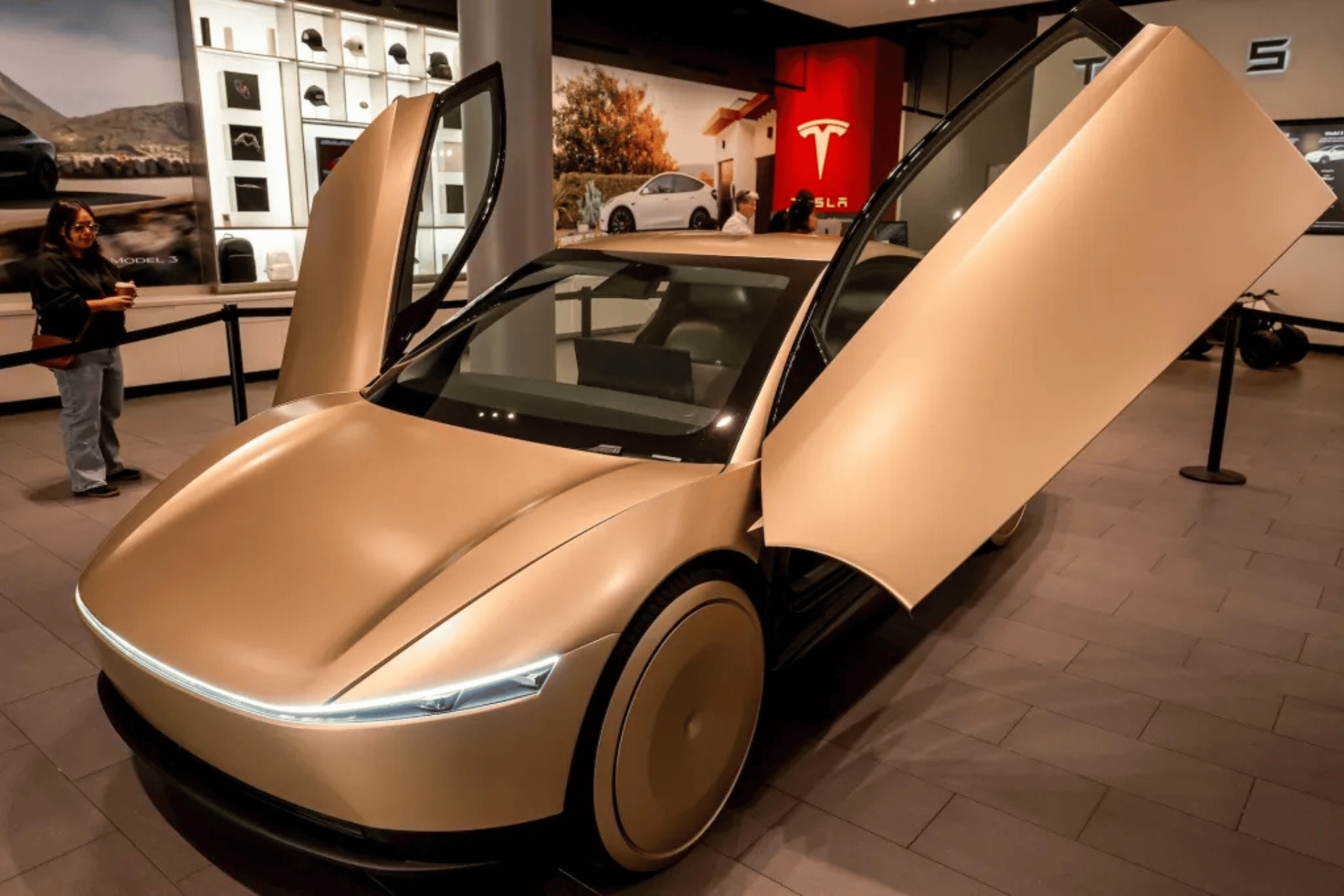
The Cybercab is a purpose-built, two-seat electric vehicle designed specifically for ride-hailing. It has a distinctive appearance — gold-colored, compact, and clearly not a converted consumer car. That visibility is a double-edged sword.
On one hand, a unique-looking vehicle makes it easier for passengers to identify their ride. On the other, every time a Cybercab makes a mistake — whether that is an unusual lane choice, a slow reaction, or a more serious incident — it will be noticed and reported. The Cybercab will be held to a higher standard of public scrutiny than a Model Y operating as a robotaxi ever was.
Tesla has been parking large numbers of Cybercabs in lots across US cities in recent weeks, which observers have read as preparation for a broader rollout. Whether that rollout happens later this year or in 2027 will depend on how the Austin testing goes and when the federal regulation changes are finalized.
The Road Ahead
Tesla has spent years promising a robotaxi future that always seemed to be just around the corner. The Cybercab testing in Austin is the most concrete step toward that future yet — real hardware, real roads, no safety net of a steering wheel.
The competition between Tesla and Waymo is going to define how autonomous transportation develops in the United States over the next few years. Both companies are making real progress. Both are also encountering real problems. Whoever figures out how to scale reliably and safely — at a price that makes rides affordable — will have an enormous market to itself.
For now, the image of a gold two-seater rolling through Austin without anyone behind the wheel is the most striking sign yet that the robotaxi era is closer than it has ever been.
Read more tech related articles here.