MTN and Vodacom Race to Build AI Data Centres: What It Means for Nigeria
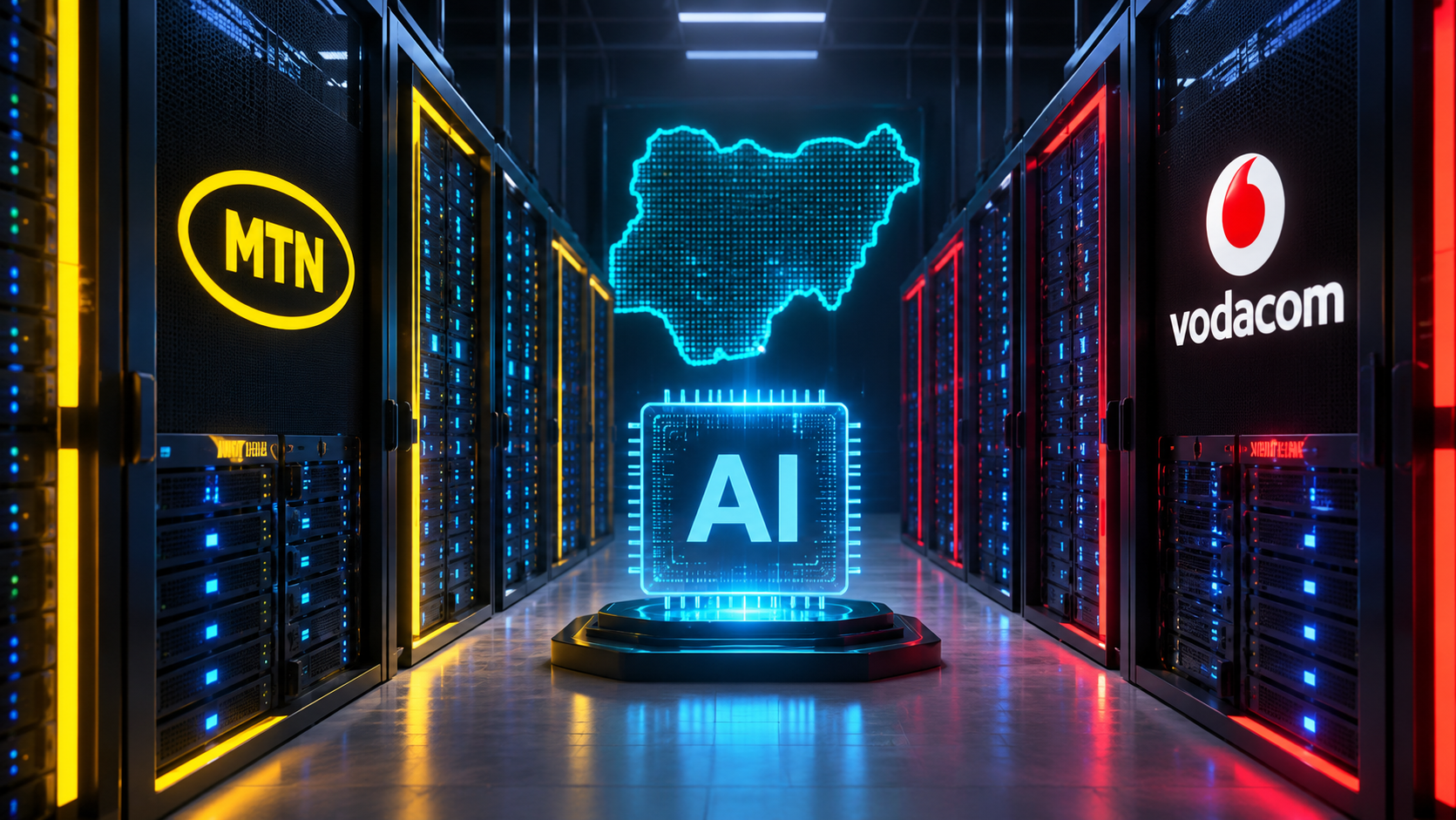
Africa’s biggest telecom operators are racing to build AI data centres, and Nigeria is near the front of the line. MTN has named Nigeria and South Africa as the first markets for its new AI data centre platform. Meanwhile, rival Vodacom said in November 2026 that it will seek partners to build AI data centres in South Africa and Kenya. Together, these moves could reshape where African data is stored and processed.
For Nigeria, more AI data centres could mean faster services, lower cloud costs and more local jobs. However, power shortages remain a serious hurdle. Here is what the telcos are planning and what it means for AI data centres in Nigeria.
MTN’s Plan for AI Data Centres in Nigeria
MTN Digital Infrastructure has formed a new company called Africa Data Hub Holding Limited with a UAE-based investment platform. According to Capacity Media, the partner was founded by Tarek Al Ashram, a Dubai-based developer who also founded the UAE colocation provider Gulf Data Hub.
The first phase targets 150 megawatts (MW) of AI-ready data centre capacity in Nigeria and South Africa. “For now, only in South Africa and Nigeria, we are in that partnership, looking at 150MW as phase 1,” MTN Group CEO Ralph Mupita said.
MTN will hold a minority stake, while the partner provides most of the capital and technical expertise. In addition, Bayobab, MTN’s pan-African connectivity business, is a shareholder and will provide fibre connectivity and sales support. Mupita added that MTN “will build out as demand requires.”
Building on MTN’s Lagos Data Centre
In Nigeria, the new platform builds on an existing site. MTN already runs the Sifiso Dabengwa Data Centre in Lagos, named after a former MTN CEO.
According to DatacenterDynamics, the first phase offers 4.5 MW of capacity across 780 racks and is designed to Tier III standards. Furthermore, a second phase could raise capacity to between 14 MW and 20 MW, depending on demand. Both phases together are valued at $235 million.
Vodacom Joins the Race
MTN is not alone. On November 12, 2026, iAfrica reported that Vodacom plans to find partners to build AI data centres in South Africa and Kenya.
Vodacom will follow the model it used in Egypt. There, it partnered with Strive Masiyiwa’s Cassava Technologies and Elsewedy Electric to build an AI data centre. According to Business Day, the first Egypt phase should attract about $200 million in foreign investment, with total investment reaching $1 billion at full capacity.
“It will be a big investment, and that is why we’re bringing on partners,” Vodacom CEO Shameel Joosub said. He also admitted that Vodacom’s existing data centres can handle enterprise work but are not ready for large AI workloads.
Why Telcos Want AI Data Centres
For telecom companies, data centres offer a new source of growth. Mobile voice and data revenues face pressure, while demand for cloud computing and AI keeps rising. Data centres also attract investors because customers usually sign long-term contracts.
Africa also has a huge gap to fill. The continent is home to roughly 18% of the world’s population but hosts less than 1% of global data centre capacity, according to figures cited by Capacity Media and iAfrica. As a result, much of Africa’s data is stored and processed overseas.
This matters for Nigeria in particular. According to BusinessDay, Nigeria spends an estimated $850 million a year on foreign cloud services. In addition, about 80% of African data is hosted offshore. Local AI data centres could keep more of that money and data at home.
Other Players in Nigeria’s Data Centre Market
MTN will face competition at home. BusinessDay reports several other major projects in Lagos:
- Kasi Cloud: a planned 100 MW AI campus in Lekki
- Airtel Nigeria (Nxtra): a $120 million hyperscale facility at Eko Atlantic
- Equinix: a $22 million facility on Victoria Island, its first newly built site in West Africa
Overall, Nigeria’s data centre sector is forecast to grow from just over $300 million in 2025 to nearly $800 million by 2031. New subsea cables such as Equiano and 2Africa are helping to drive that growth.
The Power Problem
However, electricity remains the biggest challenge. AI data centres use enormous amounts of power, and Nigeria’s grid is often unreliable. BusinessDay notes that diesel backup can account for up to 40% of a data centre’s operating costs in Africa.
Wilson Eigbadon of Vertiv put it plainly: “Africa is heading into an era where data centres will have to bring their own power.” Many operators are now looking at hybrid systems that combine gas, solar and batteries.
Power is a global issue, too. In the United States, local voters have pushed back against data centres over electricity costs, as we reported in our story on data center ballot measures. Nigeria will need clear rules to make sure new projects do not strain power supplies for homes and businesses.
What It Means for Nigerian Businesses
If these plans succeed, Nigerian businesses could benefit in several ways. Local AI data centres would cut delays when using cloud and AI services. They could also reduce costs, since companies would rely less on foreign providers billed in dollars.
In addition, local hosting can help companies meet data protection and data residency rules. Better connectivity is also part of the picture, as our report on satellite internet in Africa explains.
The Bottom Line
MTN and Vodacom are betting big on AI data centres, and Nigeria is one of MTN’s first targets. With 150 MW planned in its first phase and strong competition from Kasi, Airtel and Equinix, Lagos could become a major AI hub. Still, reliable power will decide how fast these projects grow. Ultimately, the future of AI data centres in Nigeria depends as much on electricity as on investment.