
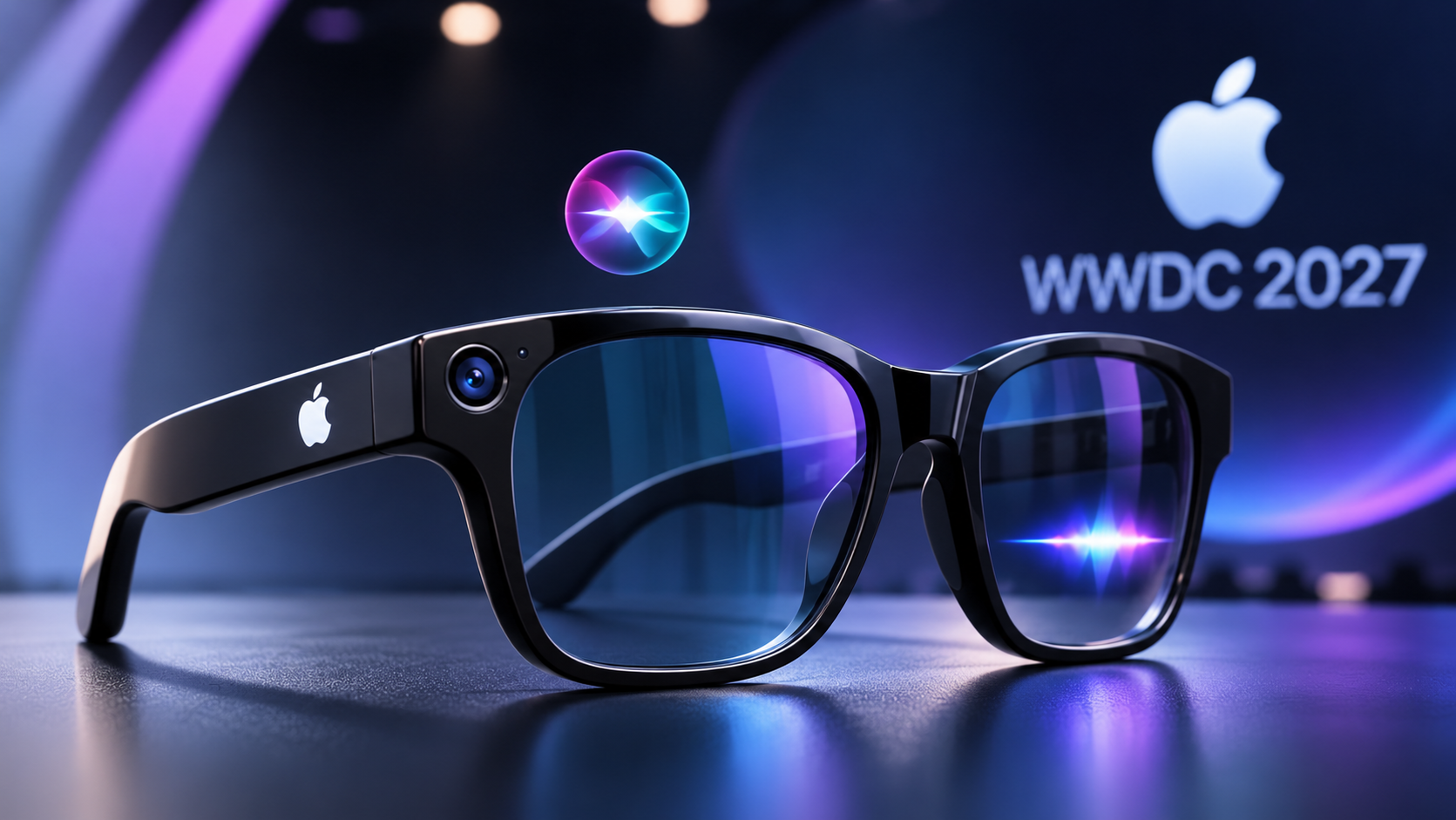
Apple Smart Glasses Reportedly Coming at WWDC 2027, With Siri Instead of a Screen
Apple smart glasses are finally taking shape. According to Bloomberg’s Mark Gurman, Apple plans to unveil its first AI-powered smart glasses at its Worldwide Developers Conference (WWDC) in June 2027. Instead of a screen, the glasses will rely on Siri, cameras and audio, putting Apple in direct competition with Meta’s popular Ray-Ban glasses.
This would be Apple’s first new product category since the Vision Pro headset. Here is what we know about the design, the features and the challenges Apple still faces.
When Will Apple Smart Glasses Launch?
According to Phandroid, which reported on Gurman’s November 15 newsletter, Apple is targeting WWDC in June 2027 for the reveal. However, June is only the announcement. Shipping is expected to start later, before the end of 2027.
The timeline is not guaranteed. The glasses have already been pushed back to 2027 once. Moreover, Apple’s software and AI work is reportedly running behind schedule, which could cause further delays.
No Screen, Just Siri
The biggest surprise is what the first model will not have. Apple’s first smart glasses will have no display in the lenses. In other words, there is no augmented reality overlay showing information in front of your eyes.
Instead, you will mainly control the glasses with your voice through Siri. According to Tom’s Guide, the glasses will use visual intelligence to scan your surroundings. As a result, Siri could answer questions about what you are looking at.
Reported features include:
- Asking Siri questions about objects and places in view
- Translating signs
- Getting directions
- Making phone calls
- Playing Apple Music
- FaceTime audio calls
Design: Thinner Than Meta’s Ray-Bans
Apple appears to be focusing on style and comfort. The prototype, codenamed N50, is reportedly slightly thinner than Meta’s Ray-Ban glasses. In addition, Apple is testing several frame styles and colours.
Tom’s Guide reports that the glasses have flush, oval-shaped cameras and use a stripped-down version of visionOS with an older Apple Watch chip. Skipping heavy display parts helps keep the glasses light. The report also mentions a small MagSafe charger about the size of a “Tic Tac.”
Privacy features are also in testing. Some test units reportedly include a front light that shows when the glasses are in use.
How Apple Smart Glasses Work With the iPhone
The glasses will depend heavily on the iPhone. Phandroid reports that the software runs on a paired iPhone, which handles most of the processing. Apple’s current plans reportedly require a recent iPhone and offer no Android support.
Interestingly, Tom’s Guide reports that the glasses will have their own Wi-Fi radio. This could let users stream audio or talk to Siri without relying only on a Bluetooth link. Even so, the iPhone will remain central to the experience.
Siri Is the Make-or-Break Feature
Because there is no screen, Siri has to do almost everything. Apple reportedly wants Siri to act as an agent that can operate existing iPhone apps by voice. For example, Tom’s Guide says Siri could book an Uber ride, order from Starbucks or reserve a table on OpenTable, all without developers building special apps for the glasses.
That is a big ask. Siri has struggled to keep up with rival assistants, and Apple is working hard to catch up. Phandroid reports that Apple’s own apps will get deeper Siri support in December, with third-party developers following in 2027.
This fits Apple’s wider push on AI. As we reported, CEO John Ternus has asked his team to speed up the Apple AI roadmap and make Siri more like an AI agent. Ultimately, the glasses will only succeed if Siri becomes truly reliable.
Apple’s Second Try at Smart Glasses
This is not Apple’s first attempt at glasses. In early 2025, Apple reportedly shelved a project codenamed N107, which would have needed a Mac connection for power and processing. We covered that decision in our report on how Apple shelved its earlier smart glasses project.
The new approach is simpler and more practical. By skipping the display and leaning on the iPhone, Apple can build lighter, more affordable glasses that people may actually wear every day.
The Competition
Apple is entering a growing market. Meta’s Ray-Ban glasses have proven that people will buy camera-equipped smart glasses with AI assistants. Meanwhile, Google and Samsung have also launched AI glasses, and Snap offers its Specs with a cellular plan.
Apple’s advantages are its brand, its huge iPhone user base and its focus on privacy. However, it will arrive later than its rivals, so it will need a strong product to stand out.
What We Still Don’t Know
Several key details remain unknown. Apple has not confirmed the glasses, and reports have not revealed a price. In addition, camera specifications and battery life have not been reported.
The Bottom Line
Apple smart glasses look set to debut at WWDC in June 2027, with shipping expected later that year. The first model will skip a display and rely on Siri, cameras and the iPhone. That makes Siri’s progress the key to the product’s success. If Apple gets it right, the glasses could become one of its most important launches in years.