
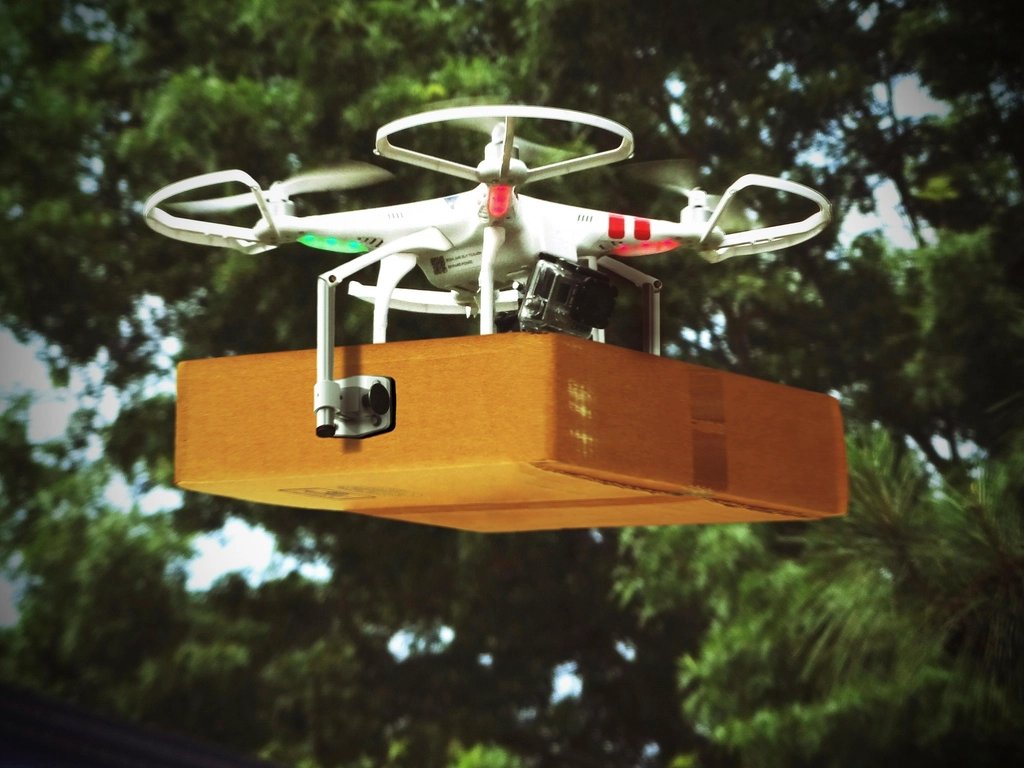
Amazon Is Bringing Drone Delivery to 500 US Cities by the End of This Year
Drone delivery has spent years as a promising technology perpetually stuck in pilot mode. That changes fast this year.
Amazon announced this week that its Prime Air drone delivery service will expand to nearly 500 cities and towns in the United States by the end of 2026 — a sixfold increase from its current footprint — bringing ultrafast drone delivery to communities with tens of millions of customers across the country.
This is not a trial. It’s a mainstream logistics rollout, and it arrives as Amazon faces the most competitive last-mile delivery market in its history.
What Prime Air Actually Offers
The service is straightforward. Prime Air drones are rated for packages up to 5 pounds — a threshold the company says covers more than 60% of its most commonly ordered products. Eligible products include groceries, medications, electronics, and cosmetics. Deliveries can reach customers in as little as 30 minutes.
Pricing is tiered. Prime members receive free drone delivery on orders of $50 or more. Orders under $50 cost Prime members $2.99, while non-members pay $4.99. For a same-day delivery, that pricing is competitive with virtually every alternative — and 30 minutes is faster than anything a human driver can reliably match.
The drones operate autonomously. Amazon’s industry-leading Detect-and-Avoid system enables drones to independently monitor airspace and make real-time safety decisions. The company holds FAA Part 135 certification — the same framework applied to commercial air carriers — along with waivers to fly beyond the visual line of sight of operators. These aren’t hobby drones operating in a regulatory grey zone. They’re certified commercial aircraft.
Where It’s Going and When
Prime Air currently operates in 11 metro areas across seven states — Arizona, Florida, Kansas, Louisiana, Michigan, Nebraska, and Texas. The service is set to launch soon in the Chicago, Atlanta, Cleveland, Syracuse, and Boise metro areas, with additional locations to follow.
The next wave is expected to include communities around Chicago, Atlanta, Cleveland, Syracuse, and Boise, joining existing operations in markets including Phoenix, Detroit, Houston, San Antonio, and Kansas City. The expansion moves drone delivery from a handful of test markets into something approaching national coverage within a single calendar year.
The pace of expansion matters. Amazon has already delivered hundreds of thousands of packages to customers by drone this year, with thousands completed daily. This isn’t a volume figure to dismiss — it represents genuine operational experience at a scale no other drone delivery company has matched in the US.
The Competition Is Real
Amazon isn’t moving alone. The drone delivery market has become one of the most competitive corners of logistics — and the pressure from rivals is one reason Amazon is accelerating now rather than later.
Rival Alphabet’s Wing has surpassed 1 million drone deliveries and is expanding its own commercial operations across the US and Australia. Walmart announced its own expansion plans recently, with the company saying its drone service would reach 40 million customers by next year. Uber Eats has a partnership with Zipline for drone delivery in existing US markets.
The strategic logic for Amazon is clear: drone delivery dramatically reduces the cost of last-mile logistics — the most expensive part of the delivery chain — while creating a speed advantage that ground-based delivery simply cannot match. If Prime Air can deliver commonly ordered household items in 30 minutes at no incremental cost to Prime members, it becomes a powerful reason to keep buying from Amazon rather than competitors.
The Safety and Privacy Questions
Amazon’s announcement directly addressed the objections that have followed drone delivery since its earliest pilots.
On safety: Amazon points to its Part 135 certification from the FAA, noting it is the highest level of FAA oversight for this type of operation. But independent aviation analysts note that as Amazon, Google Wing, police departments, and other operators take to low-altitude airspace in growing numbers, the risk of collisions increases. Obstacle detection technology is improving quickly but wires below 400 feet and increasing low-altitude drone traffic create real hazards. A mid-air collision in Tolleson, Arizona last October — where two Amazon drones collided with a crane boom — was a reminder that operational risk at scale is different from operational risk in a pilot.
On privacy: Amazon says its drones use onboard cameras and sensors to navigate but do not record a live video feed monitored by an employee. That addresses the most obvious concern — drones streaming live footage of backyards and properties — but questions about data retention, flight logs, and what the company does with the navigational imagery its drones collect remain largely unanswered in public-facing communications.
What It Means for Everyday Shoppers
For most people in the 500 cities Prime Air will serve by year-end, the practical question is simple: is 30-minute drone delivery actually useful in daily life?
For some orders, the answer is obviously yes. Running out of medication. A last-minute ingredient for dinner. A phone charger cable before a meeting. These are the use cases where speed matters enough to change behaviour — and where drone delivery beats every ground-based alternative on the market.
For larger, heavier, or less urgent purchases, same-day or next-day ground delivery remains fine. Drone delivery doesn’t need to replace everything to be valuable. It needs to be the clear best option for a specific, high-frequency subset of orders — and based on what Amazon is offering, it’s building toward exactly that. For more on how autonomous technology is reshaping logistics and everyday life, see our overview of 10 emerging technologies transforming the future and our coverage of Uber’s $10 billion robotaxi expansion.
Read more tech related articles here.