Claude Shared Chats on Google: What Happened, and How to Check Your Own Settings
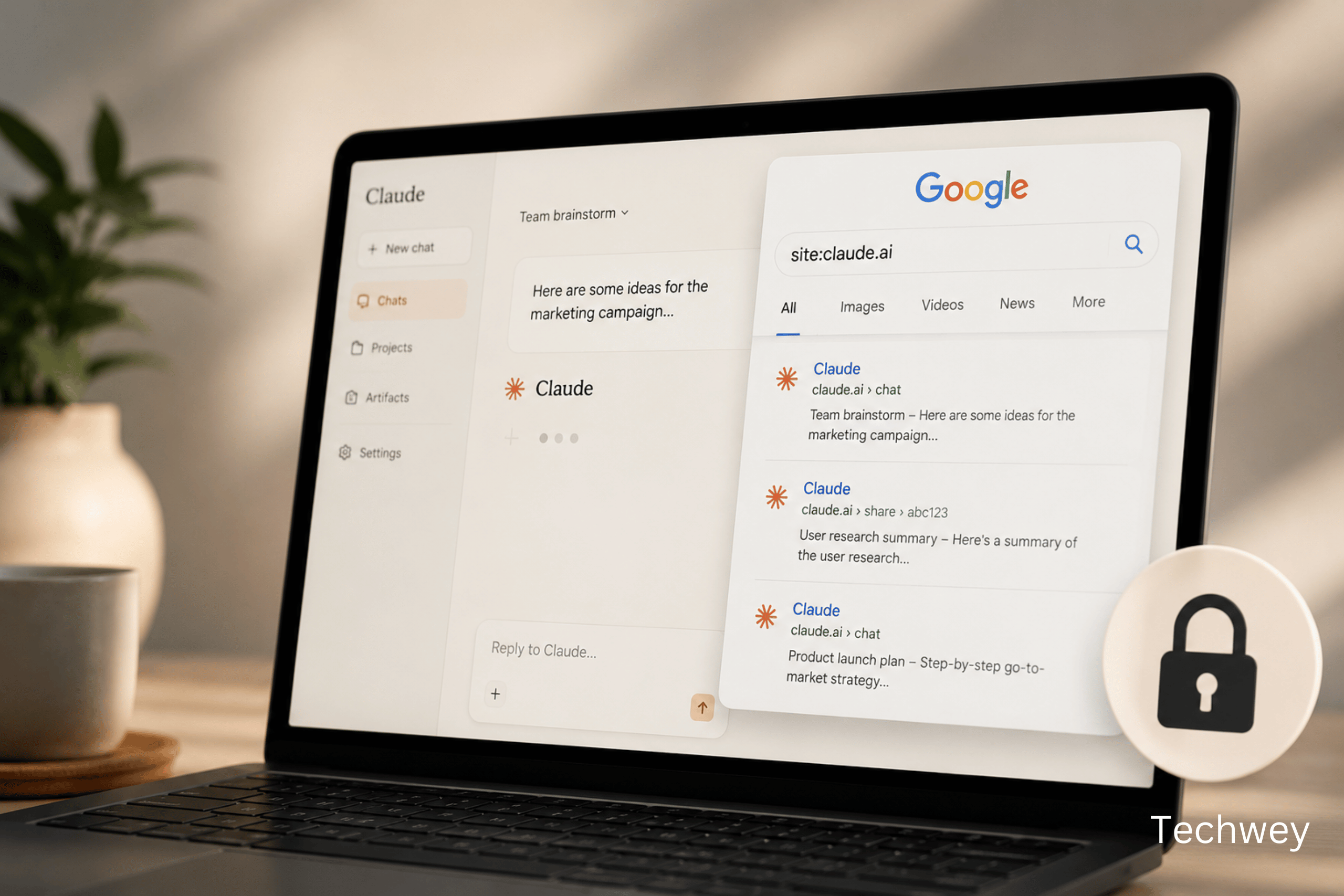
Over the weekend, a growing number of Reddit users discovered something unsettling: typing a simple search string into Google could surface a long list of private-seeming Claude conversations, complete with health records, internal company documents, and in some cases, the names and phone numbers of children.
The Claude shared chats Google exposure quickly became one of the more talked-about AI privacy stories of the week, and it’s a useful case study in how a seemingly small sharing feature can spiral into a much bigger problem once the open web gets involved.
How Claude Shared Chats Ended Up on Google
The issue traces back to Claude’s “share chat” feature, which lets users generate a link so they can send a conversation or Artifact (an interactive mini app or document built inside Claude) to someone else. According to TechCrunch’s reporting, the feature is clearly framed around sharing with friends or colleagues, not the entire internet — but once a link gets posted somewhere public, like a forum thread or a social media post, search engines can crawl and index it just like any other public webpage.
404 Media, which first reported on the exposure, described users stumbling onto conversations and creations they clearly weren’t meant to see, simply by searching a specific site-restricted query on Google. Once that query started circulating, anyone curious enough could dig through what turned up.
The scope of what got exposed was the real shock. TechCrunch’s reporting cites Futurism finding “a detailed medical report of a real patient, clinical trial results that included patient names,” and documents listing children’s names and phone numbers, along with internal company files. In at least one case reported by Fortune, an exposed chat reportedly showed Claude producing content that violates Anthropic’s own usage policy.
What Anthropic Says About the Claude Shared Chats Google Exposure
Anthropic’s position is that the exposure came down to how users chose to share their links, not a flaw in the platform itself. Company spokeswoman Amie Rotherham told TechCrunch: “We give people control over sharing their Claude conversations publicly, and in keeping with our privacy principles, we do not share chat directories or sitemaps with search engines like Google. These shareable links are not guessable or discoverable unless people choose to share them themselves.”
In other words, Anthropic’s argument is that a link only becomes searchable once someone posts it somewhere public enough for a search engine’s crawler to find it, the same logic that governs any public webpage. A Google spokesperson made a similar point to TechCrunch, noting that neither Google nor other search engines control which pages site owners choose to make crawlable and indexable.
That framing may be technically accurate, but it also puts a lot of responsibility on everyday users to understand a distinction that Claude’s own interface doesn’t spell out clearly. As of Monday afternoon, TechCrunch reported that the specific search method used to surface these chats no longer returned results, suggesting at least some remediation had already taken place.
This Isn’t the First Time This Has Happened
If this story sounds familiar, that’s because it is. Forbes reported a similar incident last year, in which Google had indexed several hundred Claude conversations before they disappeared from search results. Around the same time, 404 Media separately reported that nearly 100,000 ChatGPT conversations set to “shared” had turned up searchable on Google, too. Public link-sharing features across major AI chatbots keep running into the same underlying issue: users generally assume “shareable” means “shareable with the people I choose,” not “potentially crawlable by any search engine on Earth.”
How to Check and Protect Your Own Shared Chats
Whether or not you use Claude regularly, this is a good moment to audit any AI tool where you’ve ever generated a “share” link. For Claude specifically, TechCrunch’s reporting points to a quick fix: go to Settings, then Privacy, then Shared Chats, to review exactly which conversations you’ve set to have a public link, and revoke access to anything you don’t actually want searchable.
More broadly, treat any “create public link” option inside an AI chatbot the same way you’d treat a public Google Doc: assume that once you post that link anywhere outside a private message, it could eventually be found and indexed. If you’ve shared anything containing personal information, medical details, or client data through one of these links, it’s worth checking Have I Been Pwned periodically as a general habit, and reviewing your account’s sharing history on any AI platform you use regularly.
The bigger lesson here isn’t really about Claude specifically. It’s that “shareable link” features across the AI industry have repeatedly proven confusing enough that even privacy-conscious users have gotten caught out by them. Until that UX gets clearer across the board, the safest approach is to assume anything you can generate a public link for should be treated as, well, public.
Read more tech related content here.