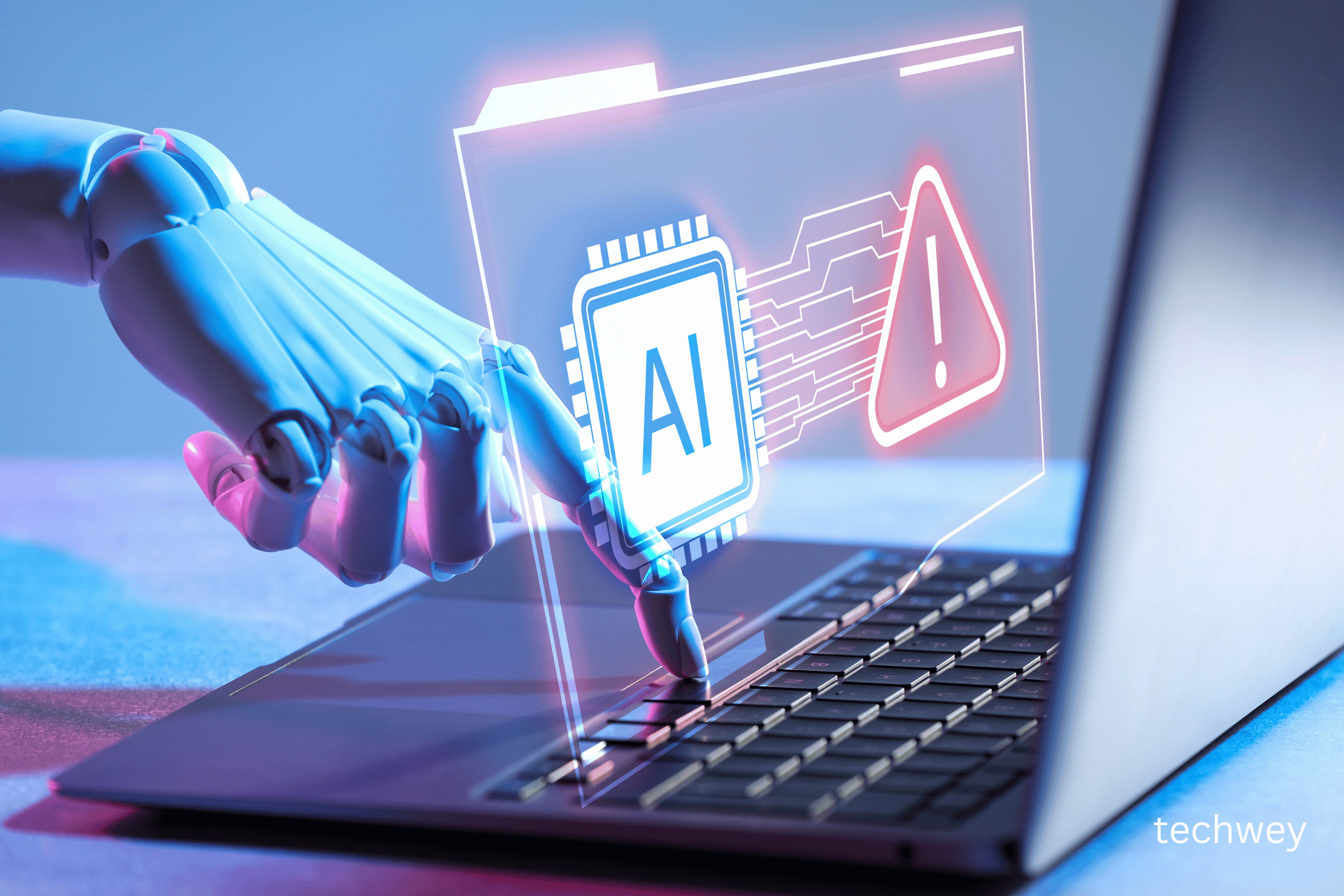
Artificial intelligence is no longer just a tool for innovation — it has become a weapon. Cybercriminals are increasingly leveraging AI to craft more convincing phishing emails, automate attacks at scale, and bypass traditional security defenses. Understanding how these AI-powered cyber threats work, and how to guard against them, is no longer optional — it is essential for individuals and businesses alike.
Why AI Makes Cyber Threats More Dangerous
Traditional phishing attacks were often easy to spot: poor grammar, generic greetings, suspicious links. AI has changed that entirely. Today, attackers use large language models to generate highly personalised, grammatically flawless messages tailored to specific targets. They scrape social media profiles, LinkedIn pages, and public data to craft emails that sound like they came from a trusted colleague or manager.
Beyond phishing, AI is enabling voice cloning and deepfake attacks — where a criminal mimics the voice or appearance of a CEO to authorise fraudulent transfers. Automated vulnerability scanning bots can now probe thousands of systems per second, compressing the window between a vulnerability being disclosed and being exploited.
1. Enable Multi-Factor Authentication (MFA) Everywhere
This remains one of the most effective defenses against account compromise. Even if a cybercriminal obtains your password through a data breach or phishing attack, MFA adds a second layer of verification — a time-sensitive code, biometric scan, or hardware key — that is extremely difficult to bypass.
Use app-based authenticators such as Google Authenticator or Authy rather than SMS-based codes, which can be intercepted through SIM-swapping attacks. For businesses, enforce MFA across all internal systems and cloud platforms without exception.
2. Train Your Team to Recognise AI-Generated Threats
Security awareness training needs to evolve beyond outdated advice. Employees should understand that a well-written, personalised email is no longer proof of legitimacy. Red flags now include unexpected urgency, requests to bypass approval processes, and messages referencing very specific personal or company details — all of which AI can now fabricate convincingly.
Establish a clear internal protocol: when in doubt, verify any sensitive request through a separate, trusted communication channel before acting. Regular simulated phishing drills help your team build the instinct to pause and question before clicking.
3. Use AI-Powered Security Tools to Fight Back
Fortunately, defenders have access to the same technology. Modern endpoint detection and response (EDR) platforms and email security tools now use machine learning to identify behavioural anomalies, flag suspicious activity in real time, and block threats before a human analyst would notice anything unusual.
For businesses, investing in an AI-driven security information and event management (SIEM) system can dramatically reduce response times. Your defenses must operate at the same speed as the attacks they are designed to stop.
If you are looking to deepen your understanding of modern security frameworks, read our guide on Zero-Trust Security for Businesses — an approach that assumes no user or device is automatically trusted, even inside your own network.
4. Keep Software Updated and Patch Religiously
AI-powered bots can scan for unpatched systems at a scale no human attacker can match. A software vulnerability that might have gone unnoticed for months can now be identified and exploited within hours of public disclosure.
Automating software updates and patch management removes this window of exposure. This applies not just to your operating system, but to every application, browser extension, and piece of firmware across your network. It is also worth understanding how emerging encryption standards are evolving to stay ahead of the next generation of quantum-powered attacks.
The Bottom Line
AI is raising the stakes on both sides of the cybersecurity equation. The threats are smarter, faster, and more convincing than ever before — but so are the defenses. The key is to stay informed, adopt a layered security strategy, and build a culture of healthy scepticism. In the age of AI-powered cyber threats, not everything that looks legitimate is.
Read more tech related articles here.





Leave a Reply