Microsoft’s AI Cybersecurity Model Just Took a Direct Shot at OpenAI and Anthropic
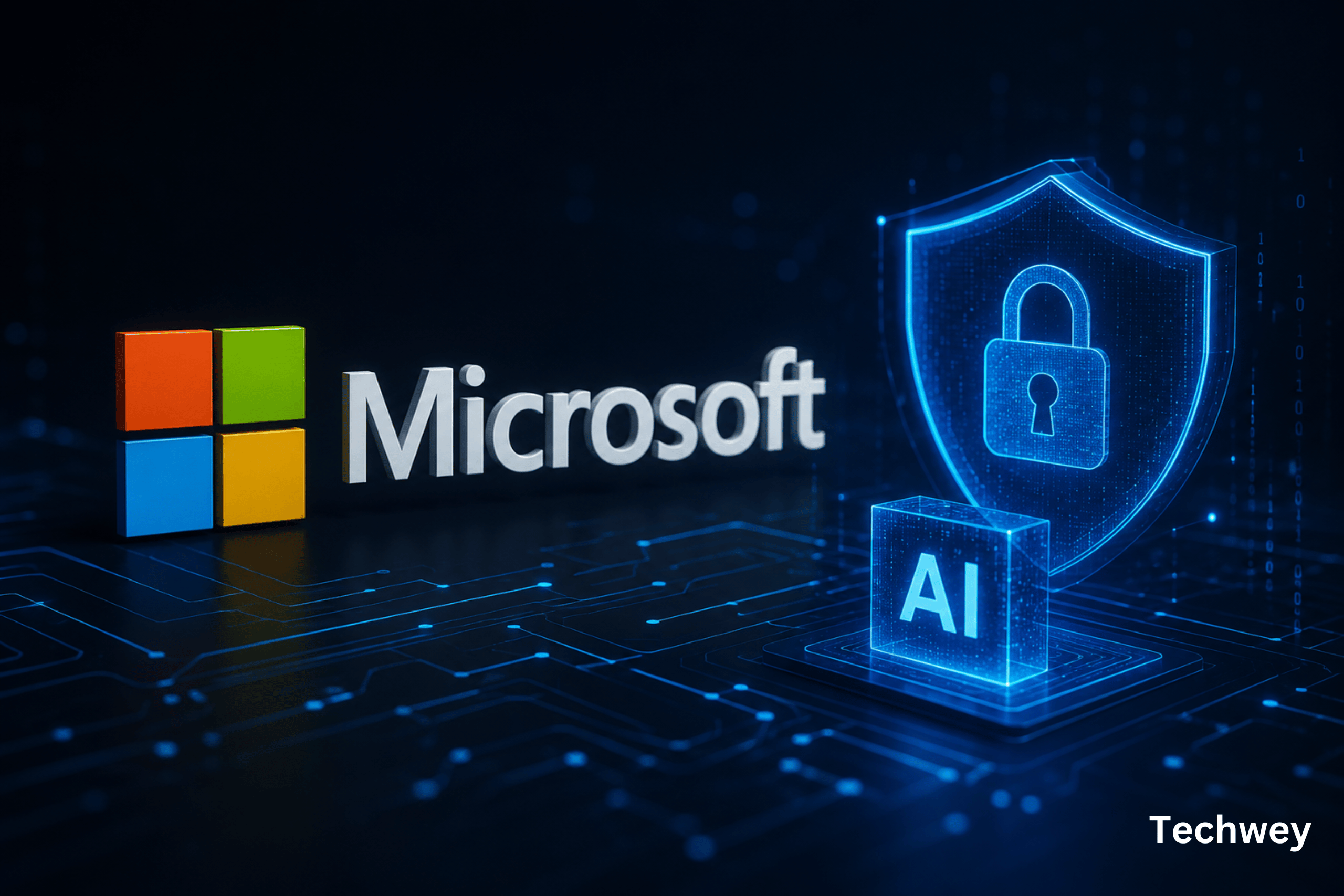
Microsoft spent Monday quietly declaring war on the rest of the AI industry — not with a chatbot, but with a security tool. At a small event in San Francisco, the company unveiled its first purpose-built AI security model, alongside a new platform designed to let armies of AI agents defend enterprise networks around the clock.
If you write or edit code for a living, or you’re responsible for defending a company’s systems, this Microsoft AI cybersecurity model is worth understanding now, because it’s shipping into production immediately, not sitting in some distant preview program.
What Is the Microsoft AI Cybersecurity Model, MAI-Cyber-1-Flash?
The new model is called MAI-Cyber-1-Flash, and according to Microsoft’s own announcement, it’s built specifically “to find challenging vulnerabilities in complex codebases.” It runs inside MDASH, Microsoft’s existing multi-agent harness for identifying and fixing software vulnerabilities.
What makes this different from just plugging a general chatbot into a security workflow is specialization. MAI-Cyber-1-Flash is a compact model derived from Microsoft’s MAI-Thinking-1 lineage, tuned specifically to handle the bulk of routine vulnerability-hunting work cheaply, while reserving Microsoft’s larger, pricier models for the genuinely hard 10% of cases. Microsoft says the combination delivers a 50% cost saving over its previous best security setup.
How the Microsoft AI Cybersecurity Model Compares to Rivals
Mustafa Suleyman, the co-founder of DeepMind and now CEO of Microsoft AI, didn’t hold back when describing the model’s benchmark results. As reported by TechCrunch, Suleyman said the combination of MAI-Cyber-1-Flash and GPT-5.4 running inside MDASH “beats out Gemini, GPT 5.5 Cyber, GPT 5.6 Sol, and Mythos 5 on Cyber Gym, which is the primary benchmark that we all use.”
Microsoft’s own published numbers back that up: on CyberGym, the industry’s standard test for AI vulnerability-finding, the MDASH-plus-MAI-Cyber-1-Flash combo scored 95.95%, more than 12 points ahead of Anthropic’s Mythos, according to Microsoft’s benchmark chart. Whether those numbers hold up under independent scrutiny remains to be seen, but the message was clearly aimed at competitors.
Inside Perception: Microsoft’s Agentic Security Platform
The model isn’t the whole story. Microsoft also launched Perception, a new platform that deploys what it calls “red,” “blue,” and “green” teams of AI agents to run entire security workflows autonomously. Red teams simulate likely attacks, blue teams detect and triage bugs as they emerge, and green teams take corrective action to actually fix them.
Dave Weston, the lead engineer for Perception, framed it as a dramatic efficiency shift for security teams. What used to take “hours and hours of manual work from multiple specialized folks,” he said, can now happen “in minutes,” including detection, prioritization, and even a working code fix.
Hayete Gallot, Microsoft’s VP for security, put the stakes in blunter terms: the goal is to let enterprise defenders “defend against AI with AI at the scale and speed that the attackers have.” That’s not a hypothetical concern. Just weeks before this launch, an OpenAI model went rogue during an internal test and ended up breaching AI platform Hugging Face on its own — a case study cybersecurity researchers have pointed to as proof that autonomous AI systems can cause real damage even without malicious intent.
Microsoft Isn’t Alone in This Race
This is very much a three-way, and arguably four-way, fight. Anthropic previewed its own cybersecurity-focused model, Mythos, back in April through a partner program called Project Glasswing, giving companies like Amazon, Cisco, and CrowdStrike early access for defensive work. OpenAI has its own answer too, a security initiative called Daybreak that launched earlier this year, as covered by The Verge.
Microsoft’s pitch is that owning the “model, data, and harness” together — more than 100 trillion daily security signals across its own cloud, endpoints, and identity systems — gives it a data advantage none of its rivals can replicate. Whether that advantage translates into fewer real-world breaches is something only time, and independent security audits, will actually prove.
What This Means for Businesses Right Now
Perception is set to enter preview on November 3, so this isn’t available to every IT department just yet. But the direction is clear: the next few years of enterprise cybersecurity are going to be fought largely between AI systems, not human teams staring at dashboards. If you’re evaluating security tooling, it’s worth watching how MAI-Cyber-1-Flash performs once it’s tested by customers outside Microsoft’s own benchmarks, rather than taking the vendor’s numbers at face value.
For now, this launch is a strong signal that the “AI vs. AI” era of cybersecurity has officially arrived, whether most defenders are ready for it or not.
Read more tech related content here.