Nvidia Is Eyeing a $30 Billion Bet on Perplexity.
Nvidia is in talks to invest in Perplexity as part of an equity funding round that would value the AI startup at more than $30 billion, according to people with knowledge of the discussion. The round would increase Perplexity’s valuation by more than 50% from its previous financing just a year ago.
The headline is interesting. The reasoning behind it is more so.
What Perplexity Is, and What It’s Become
Most people know Perplexity as an AI-powered search engine. You type a question, it searches the web, synthesises sources, and gives you an answer with citations. It’s fast, accurate, and increasingly the preferred research tool for professionals who find Google too cluttered and ChatGPT too disconnected from live information.
But Perplexity isn’t just search anymore. The sharp revenue increase is partly attributed to Perplexity Computer, a cloud-based AI agent designed to automate computer-based tasks for professional users. Perplexity Computer is an autonomous AI agent — give it a goal, and it handles the steps to get there, browsing the web, filling forms, managing files, and completing multi-step workflows without constant human direction.
That pivot from search to agent is what makes the current revenue numbers genuinely striking. Perplexity’s annualised revenue has risen to more than $750 million from less than $250 million at the start of the year. Tripling revenue in eight months is extraordinary by any standard. It’s the kind of growth curve that changes how investors think about valuation.
Why Nvidia Wants In
This isn’t Nvidia’s first investment in Perplexity. Nvidia has had money in Perplexity since 2023. But the scale of the current discussion — and the strategic context around it — signals something more deliberate than a passive bet on an interesting startup.
As the world’s top supplier of silicon for high-frequency AI inference, Nvidia has a vested interest in making sure that the search layer — which is a massive compute ecosystem — remains aligned with its chip ecosystem. What Nvidia doesn’t want is for the likes of Perplexity and others to go sniffing around rival chipmakers such as AMD and Cerebras, which both offer alternative chips for AI inference. In that way, Nvidia is investing in Perplexity as a kind of insurance policy to safeguard its future revenue stream against possible shifts in AI search architecture.
There’s a lock-in dimension too. In July, Perplexity committed to running its AI agent workloads on Nvidia’s Vera CPUs. An equity investment deepens that alignment and makes it structurally harder for Perplexity to pivot to AMD or another supplier without awkward implications for its relationship with one of its largest shareholders.
Nvidia has acted as a “central bank” of sorts to AI startups in the last several years, giving these companies capital as they rent or buy Nvidia’s chips. In addition, Nvidia CEO Jensen Huang has said in interviews that Perplexity is his go-to chatbot. That’s not just colour — it’s a signal of how aligned the two companies’ interests already are.
The Valuation Math
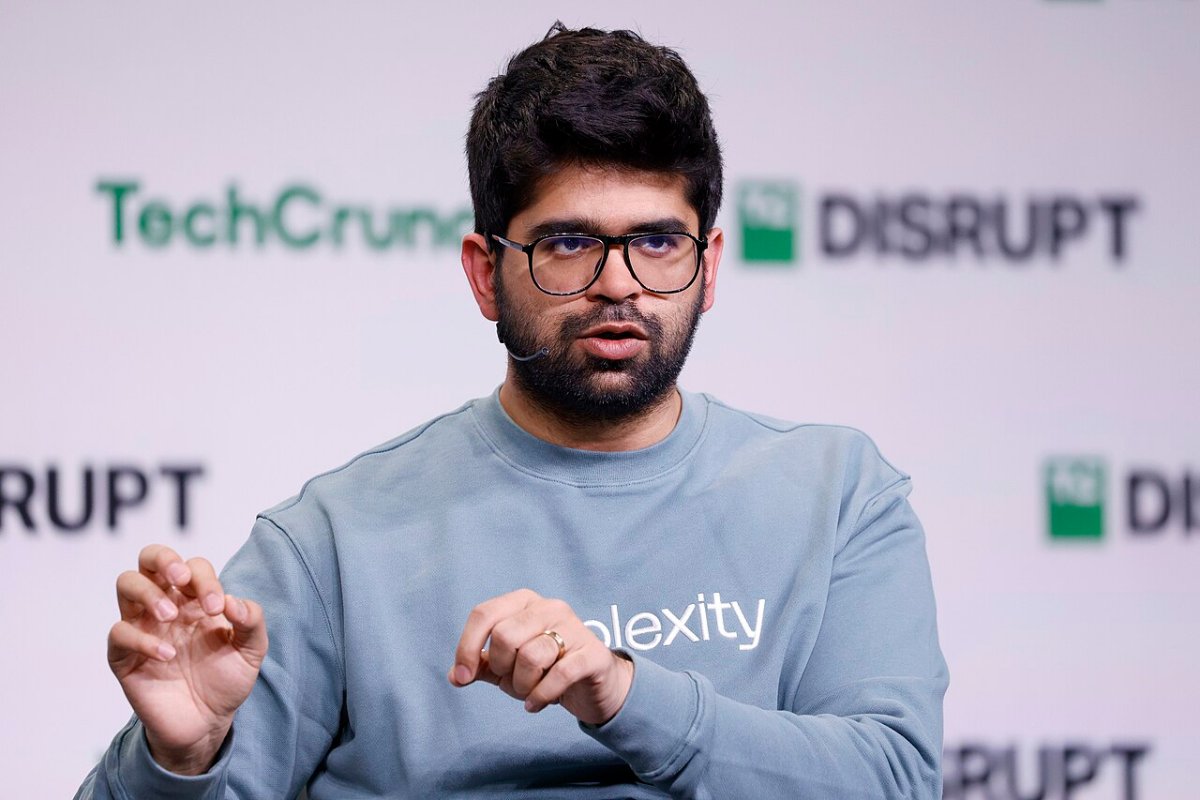
At $750 million in annualised revenue, a $30 billion valuation prices Perplexity at close to 40 times sales, a multiple private markets tolerate more easily than public ones will, which matters given CEO Aravind Srinivas has floated an IPO within the next few years.
That multiple is high but not irrational given the growth rate. A company tripling revenue year-over-year, expanding from search into the rapidly growing AI agent market, and backed by Nvidia, Amazon founder Jeff Bezos, and SoftBank commands a premium. The question is whether it can sustain the growth long enough to justify that multiple in public markets.
Perplexity raised $73.6 million at a $520 million valuation in January 2024, then achieved unicorn status by March 2024. From there: $500 million at $9 billion in late 2024, $500 million at $14 billion in May 2025, and a $20 billion round in September 2025. January 2026 brought a $23 billion round. Now the discussion is around $30 billion-plus. That’s roughly $1 billion in valuation to $30 billion-plus in about two years — one of the fastest valuation escalations in AI startup history.
The Competitive Stakes
Perplexity competes in a market that every major technology company is trying to define. Google dominates traditional search and is pushing Gemini deeper into AI-powered answers. OpenAI launched SearchGPT and has deep distribution through ChatGPT’s 900 million weekly users. Microsoft’s Copilot integrates with Bing and the entire Office ecosystem.
Against that backdrop, Perplexity’s differentiation comes from three things: speed (it’s optimised for fast, accurate answers with citations), a cleaner professional experience than ChatGPT, and increasingly, the Perplexity Computer agent capability that none of its direct search competitors currently offer at the same level of polish.
Perplexity’s strategic importance to Nvidia is amplified by its distribution efforts, such as its integration with Samsung’s Bixby assistant, putting the product in front of a massive Android user base at the hardware level. If Perplexity becomes the default AI layer on Samsung devices, the daily active user count and the data flywheel that comes with it become far more valuable than the current revenue figure suggests.
No deal has been confirmed yet. Both Nvidia and Perplexity have declined to comment. But the direction of travel is clear: Nvidia is building a portfolio of AI applications aligned to its chip ecosystem, and Perplexity — now one of the fastest-growing AI companies in the world — sits squarely at the centre of that strategy. For more on Nvidia’s broader investment moves across the AI industry, see our coverage of Nvidia’s $500 billion Wall Street financing alliance and our breakdown of the OpenAI IPO filing.
Read more tech related articles here.
Sources: The Information