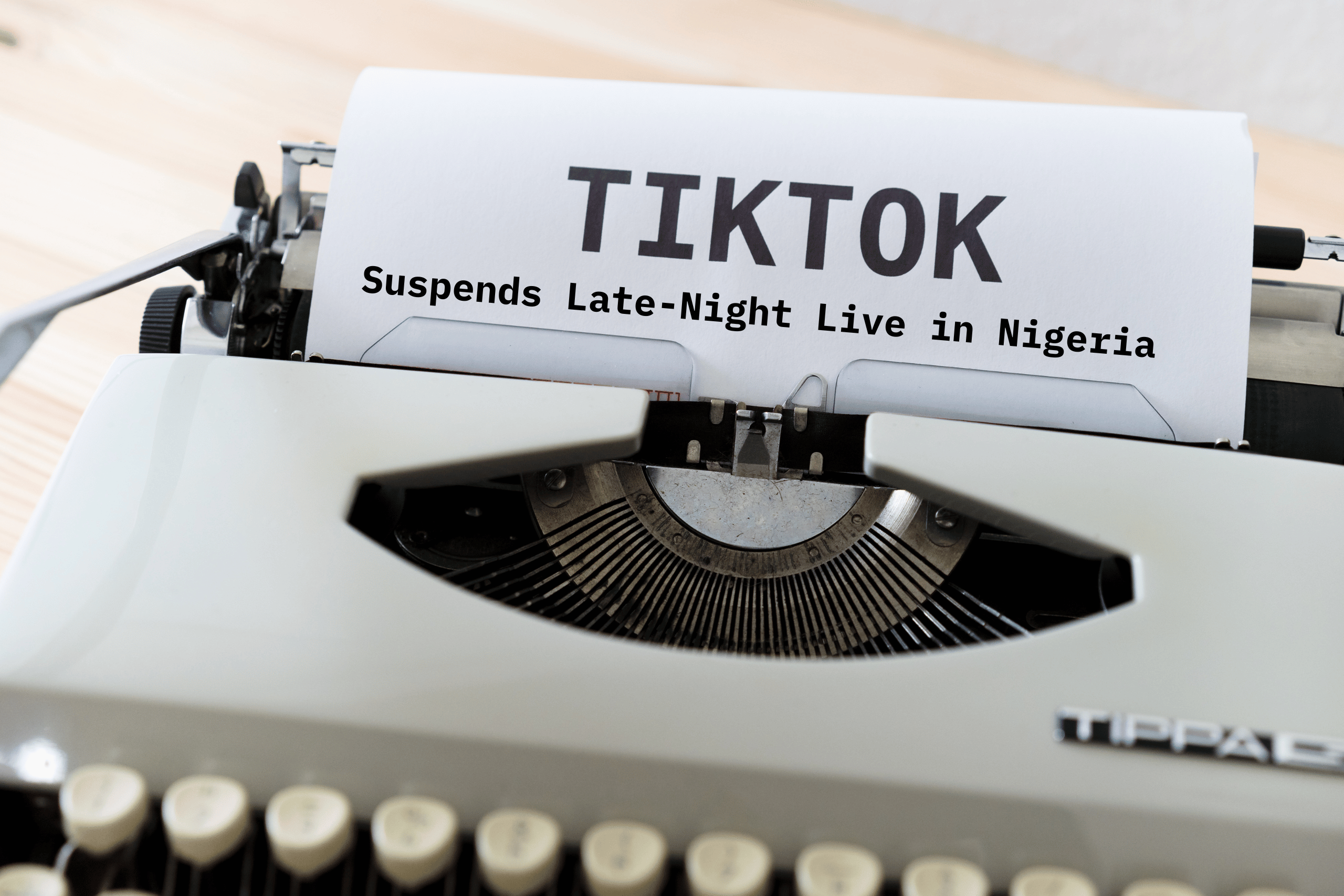
TikTok has moved to suspend late-night LIVE in Nigeria after the platform recorded a significant rise in livestreams featuring explicit sexual activity and other adult content. The temporary restriction, announced via an in-app notification, is part of a broader investigation aimed at improving user safety and community protection.
According to TikTok, Nigeria recently became one of the hotspots for inappropriate late-night livestreams. Many sessions featured people performing sexual acts on camera, with thousands of viewers tuning in. Some hosts reportedly used erotic content to attract virtual gifts, while others organised coordinated adult “shows” in pursuit of quick payouts through the app’s monetisation system.
Large-Scale Enforcement Numbers Revealed
At the TikTok West Africa Safety Summit in Dakar, Senegal, the company shared new enforcement statistics for Q2 2025.
In that period alone:
- Over 2.3 million LIVE sessions received warnings or demonetisation penalties.
- More than one million creators were sanctioned for violating LIVE monetisation rules.
- 49,512 Nigerian LIVE sessions were banned — placing Nigeria among the top countries with the highest enforcement actions in the region.
The late-night restriction is expected to affect creators the most, as the platform has blocked both hosting and viewing of LIVE sessions during those hours — the time frame in which most of the problematic content occurred. TikTok has yet to specify how long the suspension will remain in place.
A Temporary Measure, but a Broad Safety Review
TikTok emphasised that this is a temporary safety measure and part of a wider review of livestreaming practices in Nigeria. The company has introduced similar restrictions in other regions where policy violations have surged, suggesting this is a strategic approach to curb misuse while working toward a long-term safety solution.
Mixed Reactions from the Nigerian Community
Reactions among Nigerian users have been divided. Some believe the move was overdue, arguing that the platform had become increasingly flooded with explicit streams.
One user commented:
“This needed to happen. You can’t open a live at 1 a.m. without seeing something inappropriate. I feel bad for those who use TikTok LIVE genuinely, but the abuse was becoming too much.”
Others criticised the restriction’s impact on income generation, especially for creators who rely on nighttime LIVE sessions for revenue.
Another user complained:
“Why would TikTok ban night live for Nigeria? They’ve taken away our livelihood.”
In Yoruba, phrases like “atije atimu” reflect this sentiment — referring to one’s means of sustenance or livelihood.
What Happens Next?
As TikTok continues its investigation, Nigerian creators await clarity on when the feature will return and what new rules or enforcement systems may follow. For now, the suspension highlights the company’s growing challenge: maintaining platform safety while supporting the creators who depend on it.
Read more tech content here.




Leave a Reply