How Smart Technology Is Reshaping the Skincare Industry
Technology has already changed how we shop, how we drive, and how we work. Now it is quietly doing the same thing to skincare, an industry that has historically relied on guesswork, anecdotal advice, and whatever the person at the department store counter happens to recommend.
The shift is happening on several fronts: smart skin analysis, personalized product formulas, devices that adapt in real time, and matching tools that connect you with the right products for your skin. Some of it is genuinely impressive. Some of it is marketing dressed up in a lab coat.
Here is what is actually happening and what matters.
Skin Analysis Apps: From Selfie to Skin Report
The most visible change for consumers is skin analysis through your phone. Apps like Neutrogena Skin360, L’Oreal’s ModiFace, and standalone tools like SkinVision use image recognition to analyze a photo of your face and assess hydration levels, pore size, wrinkle depth, dark spots, and overall skin age.
The software behind these apps has been trained on hundreds of thousands of labeled skin images, and the better ones can match dermatologist-level accuracy for specific conditions, especially when it comes to identifying moles that might need medical attention.
The catch is that a phone camera in random lighting is not the same as a clinical tool. Accuracy varies based on image quality, how well different skin tones are represented in the training data (this is a known gap), and whether the tool was built for cosmetic analysis or actual medical screening. These apps are helpful as a starting point but should not replace a dermatologist for anything medical.
Personalized Formulas Based on Your Skin
Several companies now create custom skincare products based on quiz answers, skin analysis results, and even environmental factors like your local humidity and UV index.
Proven Skincare uses a database of over 20,000 ingredients, 100,000 products, and 8 million reviews, processed through software that generates personalized serums and moisturizers. Atolla (acquired by Function of Beauty) built a similar system using monthly skin measurements to adjust your formula over time.
The technology works. Smart matching and formula optimization are well understood. The real question is whether the personalization is meaningfully better than what a good dermatologist would recommend. The honest answer is: probably not yet, but the gap is closing. A dermatologist sees thousands of patients over a career. Software can process millions of data points.
Smart Beauty Devices
This is where hardware and software come together. The latest generation of at-home beauty devices are starting to include sensors and adaptive features.
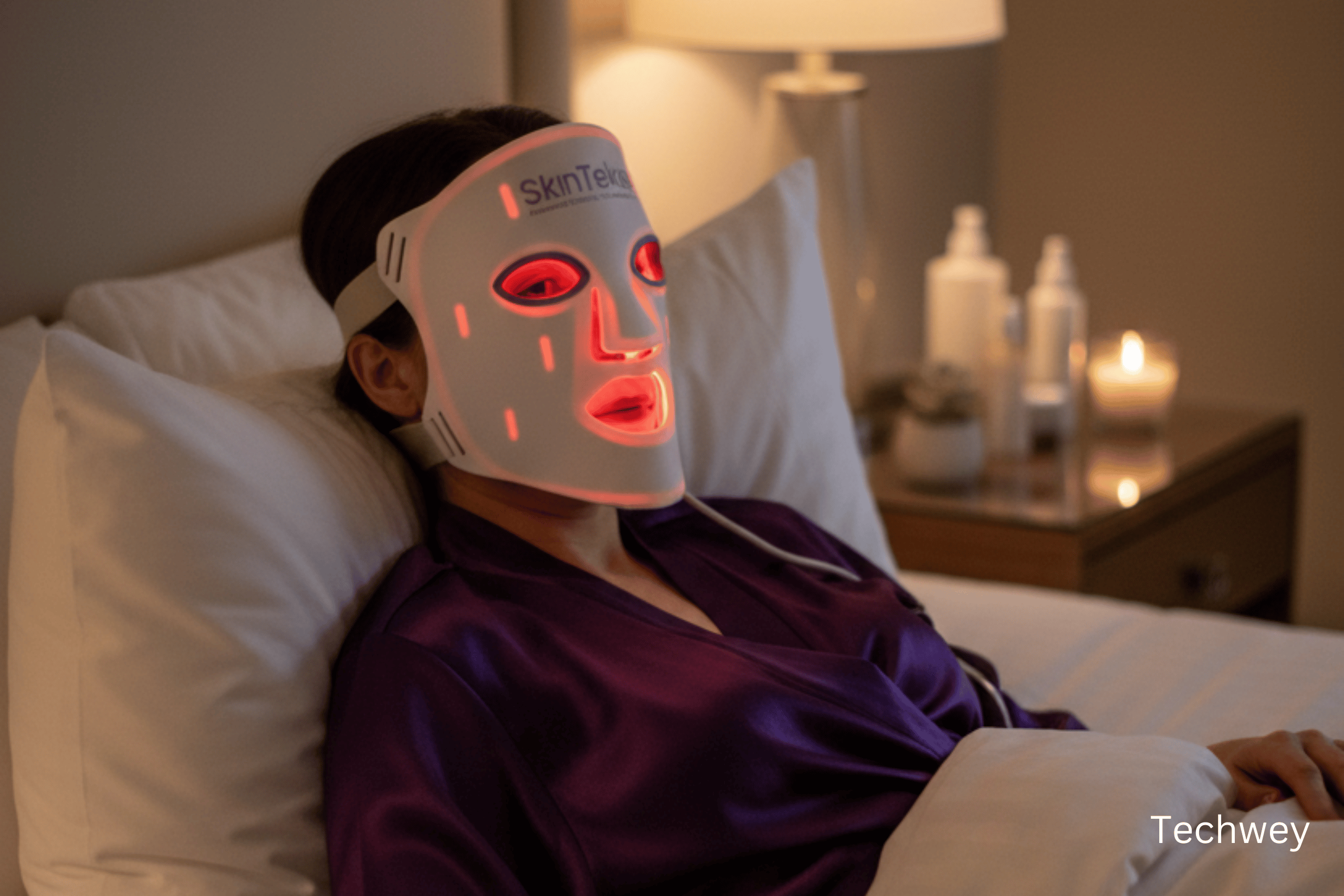
Some LED face masks now come with companion apps that track your treatment sessions and adjust recommendations based on your usage patterns and goals. The device hardware itself, meaning the LED wavelengths, power output, and treatment time, is fixed. But the software layer adds a level of personalization that did not exist a few years ago.
The more meaningful development is in skin sensors. Devices like the La Roche-Posay My Skin Track UV measure real-time UV exposure, pollution levels, and humidity, then feed that data into a recommendation system. This approach, continuous monitoring combined with smart recommendations, is the same playbook that made fitness trackers so useful.
In the LED therapy space, the trend is toward multi-wavelength devices that let you target specific concerns with different light modes. A device like the SkinTekie LED Face Mask, for example, offers four distinct wavelength modes: red for collagen, blue for acne, near-infrared for deep tissue inflammation, and orange for complexion. This lets you customize your treatment based on what your skin needs. While it does not have built-in sensors (yet), the multi-mode approach reflects the same philosophy: personalization through technology rather than a one-size-fits-all solution.
Finding the Right Products for Your Skin
Beyond formulas and devices, technology is also changing how people discover products. Traditional beauty retail relied on brand marketing and sales associate recommendations. Now, platforms like SkinSort and Picky use smart matching to connect users with products based on ingredient analysis, user reviews, and skin type compatibility.
Even individual brands are taking this approach. Some direct-to-consumer skincare companies now offer interactive quizzes on their websites that ask about your skin type, primary concerns, and goals, then recommend a specific device or treatment plan based on your answers. SkinTekie, for example, has a skincare quiz that matches you to the right device and light mode depending on whether you are targeting acne, anti-aging, dullness, or inflammation. It is a simpler approach than the formula engines mentioned above, but it reflects the same consumer expectation: do not show me everything, show me what is relevant to my skin.
The more interesting development is how beauty tech shows up in search. As people increasingly use tools like ChatGPT, Claude, and Gemini to research products, brands that provide clear, detailed, technically accurate product information are being favored in those results. The brands that will win in this environment are the ones treating their product data the way a tech company would: structured, detailed, and easy for both humans and software to understand.
What Is Coming Next
The combination of smart technology and skincare is heading toward something more proactive: devices that scan your skin before each session, software that adjusts your routine based on weather and long-term trends, and formulas that evolve with your skin as it changes over time.
We are not there yet. But the building blocks, including affordable sensor hardware, trained software models, and consumers who are comfortable using connected health devices, are all in place. The skincare industry is about five years behind fitness tech on this path, which means the next few years will see things move quickly.
For consumers, the practical takeaway is simple: the best at-home skincare devices in 2026 are the ones that give you control over your treatment (multiple wavelengths, adjustable intensity) while delivering the clinical fundamentals (correct wavelengths, adequate power, FDA registration). The smart features are coming, but the core technology has to be right first.
Techwey covers the intersection of technology, consumer products, and emerging industries.