Anthropic Is in Talks With Samsung to Build a Custom AI Chip
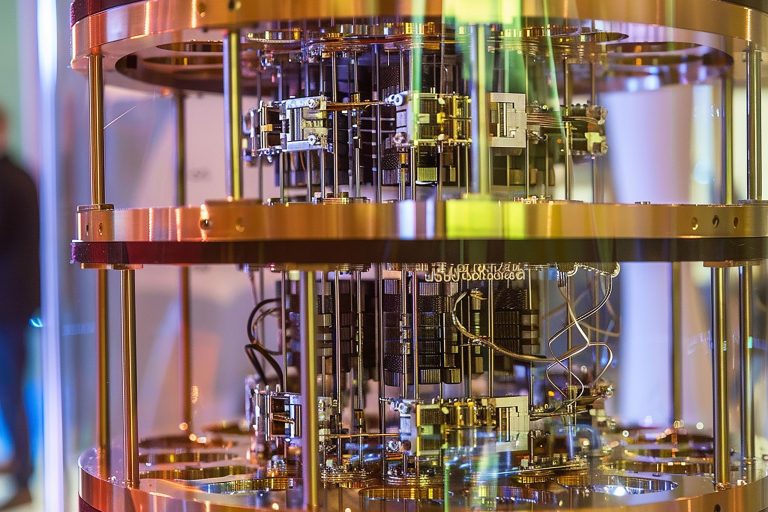
Anthropic, the AI safety company behind the Claude family of models, is reportedly in early discussions with Samsung to explore development of a custom AI chip. The report, first published by The Information, adds Anthropic to a growing list of AI companies moving to build their own silicon rather than rely exclusively on Nvidia hardware.
The talks are still early-stage. Anthropic has not yet determined what the Anthropic Samsung chip would be used for, how it would fit into server infrastructure, or how powerful it would need to be. When contacted by TechCrunch, Anthropic confirmed the report but said it had “nothing further to add” regarding the Samsung discussions.
Why Anthropic Is Looking at Custom Silicon
Anthropic’s current compute strategy is deliberately diversified. The company draws on hardware from Google, Amazon Web Services, and Nvidia — a spread that gives it flexibility but also dependence on each supplier’s pricing, availability, and roadmap decisions. A custom chip would give Anthropic more direct control over its infrastructure costs and performance characteristics.
This is not a new idea for Anthropic. In April 2026, Reuters reported that the company had been exploring the possibility of producing its own chips, partly as a response to chip shortages that have constrained AI development across the industry. The Samsung talks appear to be a continuation of that exploration.
The economics of custom silicon are straightforward: at sufficient scale, a chip designed specifically for your workloads — whether training large models, running inference, or both — can be significantly cheaper and more efficient than general-purpose GPUs. The upfront investment is substantial, but the long-term returns for a company processing as many requests as Anthropic does can justify it.
Samsung’s Position in the AI Chip Race
Samsung is one of the most logical partners for this kind of project. The company is already deeply embedded in AI hardware through its existing work with Nvidia, producing chips used for both training and running AI models. Samsung and Nvidia are also reportedly working together on an AI chip factory in South Korea, further cementing the relationship.
Samsung has also held discussions with Google about potential chip partnerships, suggesting the company is actively pursuing its position as a foundry partner for the major AI players. Taking on an Anthropic project would extend that strategy to one of the most prominent independent AI labs.
OpenAI’s Chip Move Adds Context
The Anthropic-Samsung talks come in the same week that OpenAI announced its own custom chip, named “Jalapeño,” built in partnership with Broadcom. That chip is designed to be more energy-efficient than equivalent Nvidia hardware, with better performance per watt for inference workloads.
The back-to-back announcements reflect a broader shift in the AI industry. Training and running large language models at scale is extraordinarily expensive, and custom silicon designed for specific workloads is one of the most effective levers companies have to bring those costs down. Google has been building its Tensor Processing Units (TPUs) for nearly a decade for exactly this reason.
For Anthropic to be pursuing a similar path is a signal that the company is thinking seriously about infrastructure at a scale that warrants the multi-year investment a custom chip program requires.
Challenges Ahead
Custom chip development is not fast. Designing a chip, validating it, integrating it into existing server infrastructure, and deploying it at production scale typically takes several years from first discussions to meaningful impact. Even if Anthropic and Samsung reach an agreement, the practical benefits of any custom silicon would likely be a 2028 or later story.
There is also the question of what exactly to build. Anthropic’s acknowledgment that it has not yet decided on use case, server fit, or power level suggests these are genuinely open questions — not just negotiating positions. That level of early-stage uncertainty is normal for a first chip project, but it underscores how far the effort has to travel before it produces results.
What This Means for the AI Hardware Landscape
The AI hardware market is consolidating around a small number of patterns: buy Nvidia, build custom with a foundry partner, or use cloud-provider TPUs and custom accelerators. Anthropic has been doing all three simultaneously, which is a sensible hedge. The Samsung discussions suggest the company may be ready to invest more heavily in the build-your-own track.
For Samsung, landing Anthropic as a custom chip customer would be a meaningful win — both commercially and in terms of establishing the company as the go-to foundry for AI-first companies that do not want to depend entirely on Nvidia or TSMC.
The AI chip race is still being run. But the field is widening, and the days of Nvidia holding an effective monopoly on serious AI compute may be shorter than they once appeared.
Read more tech related articles here.