
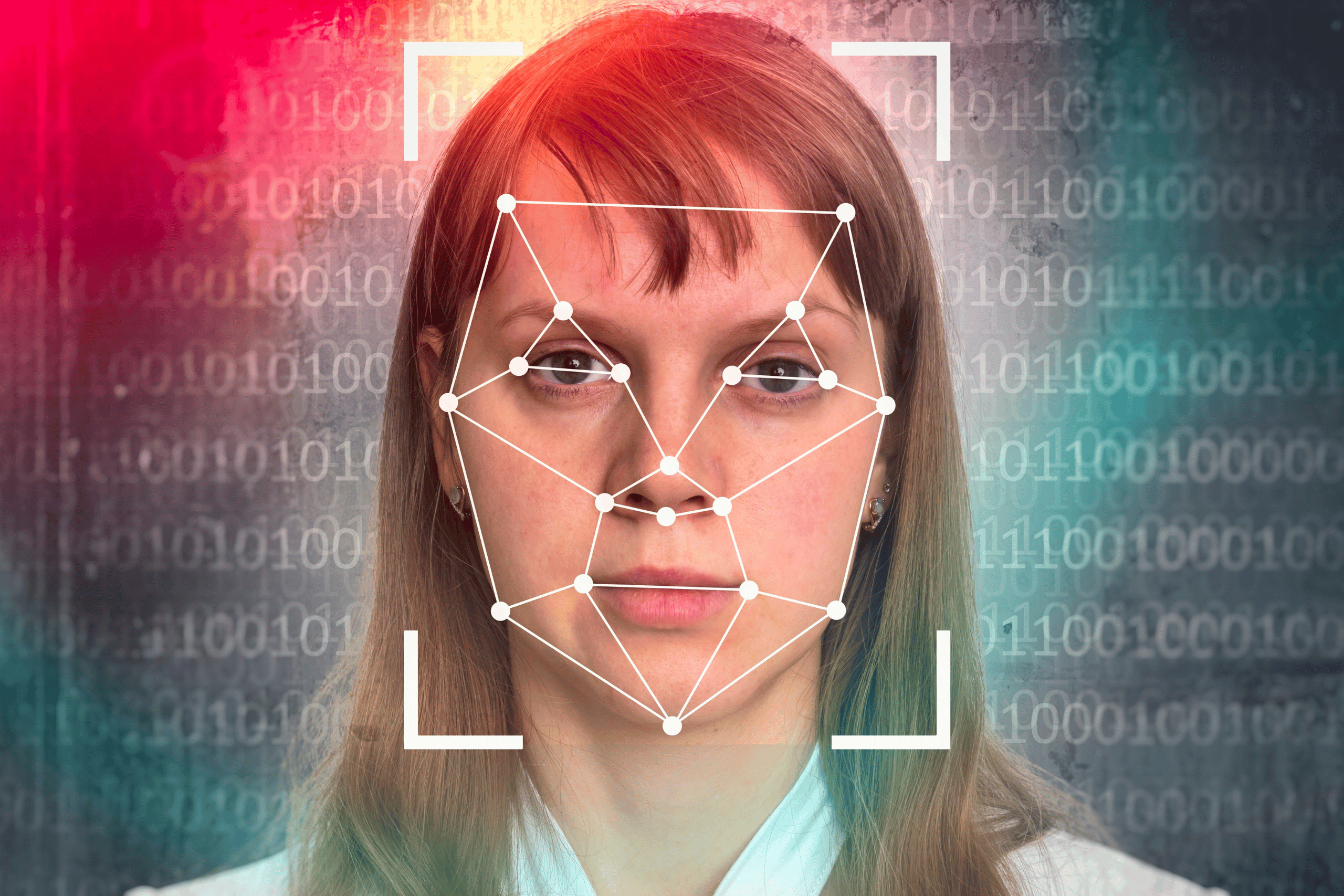
The grandmother received a video call from her grandson. He looked distressed, his voice shaky as he explained he’d been in a car accident and needed money immediately for medical bills. She transferred $15,000 within minutes. The grandson was actually safe at home—she’d been scammed by deepfake detection in 2026 criminals using AI-generated video that perfectly mimicked his appearance and voice.
This scenario isn’t hypothetical. As the UK government announced today, Britain is partnering with Microsoft to build a world-first deepfake detection framework specifically because threats like this have exploded. An estimated 8 million deepfakes were shared online in 2025, up from just 500,000 in 2023—a 1,500% increase in just two years.
The acceleration of deepfake technology combined with detection systems struggling to keep pace has created what security experts call an “asymmetric threat environment” where creating convincing fakes is easier than identifying them. Understanding deepfake detection in 2026 isn’t just a technical curiosity—it’s becoming essential digital literacy.
Why Deepfake Detection Failed to Keep Up
Traditional deepfake detection methods looked for telltale signs that made early AI-generated content easy to spot: unnatural blinking patterns, weird teeth, lighting inconsistencies, or blurry edges around faces. These techniques worked reasonably well through 2023.
Then everything changed. Modern generative AI models like LTX-2 solved those obvious problems. Today’s deepfakes blink naturally, render teeth correctly, and handle lighting that would have stumped older systems. The crude deepfakes that once dominated are being replaced by sophisticated synthetic media that even trained observers struggle to identify.
According to recent analysis, deepfake detection in 2026 now requires looking for much subtler indicators:
Micro-movements and unconscious behaviors that AI struggles to replicate perfectly—the slight head tilt during thinking, the way hands gesture naturally during speech, or how eyes track movement.
Physical interaction failures where deepfake subjects don’t interact correctly with their environment. Jewelry might morph as the head turns, hair moves as a solid mass rather than individual strands, or glasses appear to melt into skin during profile turns.
Audio-visual synchronization issues where breath sounds insert at syntactically wrong moments or repeat identical patterns. Real human speech includes natural breathing; AI audio often fails this test.
Edge cases and rotations where models trained primarily on front-facing data break down. A full profile view might show the ear blurring, the jawline detaching from the neck, or facial features distorting unnaturally.
The problem is that these detection methods require careful observation and some training. Most people scrolling social media or receiving video calls won’t notice these subtle signs—which is precisely what scammers count on.
The UK Government’s Detection Framework
Britain’s announcement represents the most comprehensive governmental response to deepfake detection in 2026 challenges yet. The initiative brings together Microsoft, INTERPOL, Five Eyes intelligence partners, and academic researchers to develop standardized evaluation criteria for detection technologies.
The Deepfake Detection Challenge, hosted by Microsoft last week, immersed 350 participants in high-pressure, real-world scenarios where they had to identify authentic, fake, and partially manipulated audiovisual media. Teams included law enforcement, intelligence agencies, and tech companies working together to understand current detection capabilities—and more importantly, their limitations.
The framework aims to establish consistent standards for assessing all detection tools and technologies, then use those standards to set clear industry expectations. By testing leading detection systems against real-world threats like sexual abuse, fraud, and impersonation, the government seeks to map where gaps in protection remain.
UK Minister for Safeguarding Jess Phillips emphasized the urgency: “Deepfakes are being weaponized by criminals to defraud the public, exploit women and girls, and undermine trust in what we see and hear.”
However, skepticism exists about whether government frameworks can meaningfully impact deepfake proliferation. Dr. Ilia Kolochenko, CEO of ImmuniWeb, argues that numerous open-source tools and expert groups already track AI-generated content. The bigger question, he suggests, is what to do once a deepfake is detected—removing it doesn’t stop the damage if it’s already been shared thousands of times.
On-Device Detection: The New Frontier
While governments develop policy frameworks, technology companies are taking a different approach: bringing deepfake detection directly to consumer devices.
Gen (parent company of Norton) unveiled an early prototype at CES 2026 that represents a significant shift in deepfake detection in 2026 strategy. Built in partnership with Intel, the technology analyzes content in real-time as users consume it, identifying simultaneous audio and visual manipulation directly on devices without transmitting data to cloud servers.
Why on-device detection matters:
Privacy protection: Analyzing content locally means your viewing habits aren’t sent to remote servers for processing. This addresses a major privacy concern with cloud-based detection systems.
Real-time protection: By processing as content plays, the system can alert users immediately rather than requiring them to manually submit suspicious videos for analysis.
No internet dependency: Detection works even offline, protecting users in situations where cloud connectivity isn’t available or is deliberately blocked by attackers.
Reduced infrastructure costs: Eliminating the need to transmit millions of videos to cloud servers for analysis makes detection more scalable and economically sustainable.
Gen’s technology, initially launched for audio deepfake detection in 2025, now handles video analysis using Intel’s upcoming Panther Lake processor. The system can detect manipulated videos of public figures directly on devices—what Vincent Weafer, Gen’s VP of research, calls “a new benchmark for the industry.”
The company emphasizes that while initial capabilities focus on detecting celebrity deepfakes, the technology will expand to protect against family member impersonation scams—the grandmother scenario described earlier. Criminals don’t need viral videos to succeed; targeted deepfakes sent to specific victims can be devastatingly effective.
The Deepfake Economy: Why Creation Outpaces Detection
Understanding why deepfake detection in 2026 struggles requires examining the economics driving synthetic media proliferation.
Creating deepfakes has become shockingly accessible. Tools that once required specialized knowledge and expensive hardware now operate through user-friendly web interfaces accessible to anyone with a smartphone. Adobe’s global survey found that 86% of creators use generative AI somewhere in their production process—many of these same tools can be weaponized for malicious purposes.
Voice cloning technology particularly demonstrates this accessibility. Services that can clone a voice from a 30-second audio sample are now available for under $10 monthly subscriptions. Combined with video deepfake tools, scammers can create convincing impersonations of virtually anyone with minimal technical skill.
The financial incentives compound the problem. According to Deloitte Center for Financial Services, deepfake-related fraud losses in the United States are expected to exceed $40 billion by 2027. Mastercard reports that 37% of businesses have been targeted by identity fraud fueled by deepfakes. These massive potential payouts attract sophisticated criminal organizations that invest in defeating detection systems.
Meanwhile, detection technology faces fundamental challenges. AI models specifically trained to defeat existing detection algorithms create an arms race that detection systems are losing. A detector reporting “90% Real” doesn’t guarantee authenticity—it just means the deepfake successfully fooled that particular algorithm.
Detection Tools Available Now
For individuals and organizations concerned about deepfake detection in 2026, several commercial solutions exist, though none are foolproof:
Reality Defender provides real-time detection across communication channels, recognized by Gartner as a leading platform. The system analyzes multiple media formats simultaneously and integrates with existing security infrastructure.
Sensity AI uses multilayer forensic analysis examining visuals, file structure, metadata, and audio signals to detect sophisticated deepfakes. The platform generates court-ready reports for judicial authorities.
DuckDuckGoose offers deepfake detection software that classifies digital assets as real or fabricated while explaining the reasoning behind each classification—crucial for understanding why content was flagged.
McAfee’s Deepfake Detector, browser extensions like Digimarc’s C2PA validator, and mobile security apps like Trend Micro’s ScamCheck provide consumer-grade protection, though with varying accuracy rates.
CloudSEK anchors detection to where manipulation surfaces first, including social platforms, domains, and brand-exposed channels, with dark web monitoring for emerging threats.
The challenge is that detection platforms remain locked in an arms race they’re struggling to win. New generative models are specifically trained to defeat existing detection algorithms, creating a cat-and-mouse dynamic where detection improvements trigger creation improvements in an endless cycle.
The C2PA Solution: Cryptographic Content Verification
Industry groups are pursuing a longer-term approach called C2PA (Content Credentials)—a standard for cryptographically signing digital content at the moment of capture, creating a tamper-evident chain of custody.
Companies like Adobe, Sony, and Leica have implemented C2PA in their cameras and software. When enabled, every photo or video captures metadata proving when, where, and how it was created. Any subsequent edits are logged in the chain, making it mathematically impossible to pass off manipulated content as original.
The limitation? C2PA only works when adopted universally. Platforms like X (formerly Twitter) strip metadata to reduce file sizes, effectively deleting C2PA manifests. Without platform cooperation, the technology can’t achieve its protective potential.
What Organizations Should Do Now
Given that deepfake detection in 2026 remains imperfect, security experts recommend layered defense strategies:
Establish verification protocols: Implement policies requiring secondary authentication for financial requests or sensitive decisions, especially those initiated via video or audio only.
Train employees and stakeholders: Regular training on recognizing deepfake indicators helps create human detection layers alongside technological solutions.
Implement detection technology: Deploy commercial detection tools appropriate to organizational risk levels, understanding they provide probability assessment rather than certainty.
Create response procedures: Develop incident response plans for when deepfakes target the organization, including legal, PR, and technical response components.
Monitor brand exposure: Track where organizational branding, executive images, and employee information appear online to identify potential attack preparation.
Support authentication standards: Advocate for platform adoption of C2PA and similar verification technologies to create ecosystem-wide protection.
The Uncomfortable Truth About Detection
Perhaps the most important insight about deepfake detection in 2026 is accepting its limitations. Perfect detection isn’t achievable—the technology for creating convincing synthetic media has surpassed our ability to reliably identify it at scale.
This doesn’t mean giving up. Rather, it means adapting our information consumption habits to a world where seeing and hearing something no longer constitutes proof. Critical thinking, verification through multiple channels, and healthy skepticism become essential skills.
The democratization of deepfake creation is happening regardless of detection capabilities. You can’t regulate away open-source models or uninvent the technology. What individuals and organizations can do is build verification protocols into personal and professional life, train teams to recognize warning signs, and question content that triggers strong emotional responses—a common manipulation tactic.
The Path Forward
Deepfake detection in 2026 represents an inflection point. The UK government’s framework initiative, on-device detection technologies, and improved commercial solutions all indicate that institutions are taking the threat seriously. But the challenge is accelerating faster than solutions can scale.
The projected 8 million deepfakes shared in 2025 will likely seem modest by year-end 2026. As AI models improve and access expands, the volume and sophistication of synthetic media will continue growing exponentially.
Success won’t come from perfect detection but from creating friction in the attack process. Making deepfakes slightly harder to create, slightly easier to detect, and significantly less effective through verification protocols collectively raises the cost for attackers while lowering the success rate.
For now, the most practical advice remains frustratingly simple: stay skeptical, verify through multiple channels, and remember that in 2026, seeing definitely isn’t believing anymore.
Have you encountered suspected deepfakes? What detection methods have you found most effective? Share your experiences in the comments.
Read more tech related articles here.





Leave a Reply