The DOJ Is Probing Nvidia’s $17 Billion Groq Deal and the Whole AI Industry Is Watching
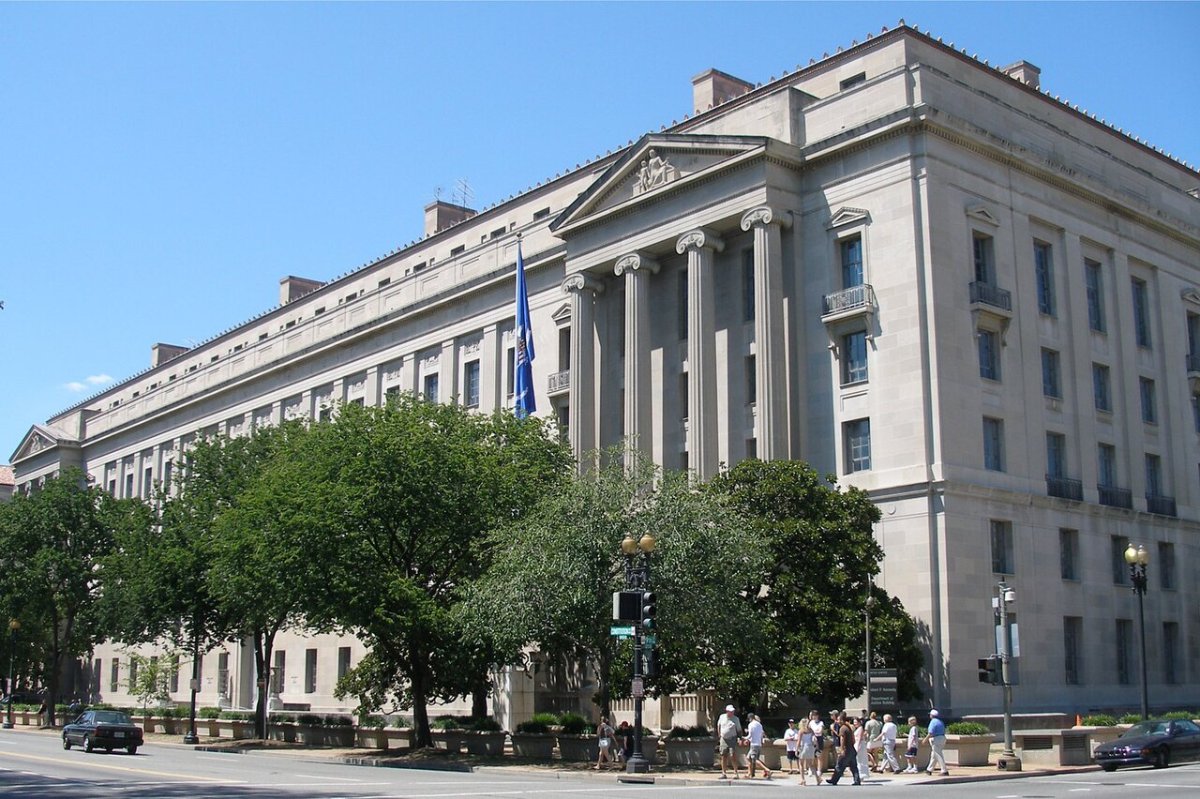
The US Department of Justice (DOJ) has formally opened an antitrust investigation into Nvidia’s $17 billion licensing arrangement with AI chip startup Groq, sending Nvidia a formal demand for information, the New York Times reported yesterday, independently corroborated by Reuters and Bloomberg. Nvidia shares dipped roughly 1% on the news this morning.
This is the first time a US regulator has moved from concern to active formal investigation of the deal structure Nvidia has used repeatedly to absorb AI companies without triggering the merger review process. The outcome could reshape how the entire AI industry structures its largest transactions.
What the Groq Deal Actually Looked Like
When Nvidia announced its arrangement with Groq in December 2025, it was structured as a “non-exclusive licensing agreement” — not an acquisition. Nvidia paid $17 billion for rights to Groq’s chip technology. Groq nominally remained an independent company. Groq founder Jonathan Ross and Chief Operating Officer Sunny Madra subsequently moved to Nvidia.
That structure is significant. Under the Hart-Scott-Rodino Antitrust Improvements Act, acquisitions above a certain threshold — currently around $119 million — must be reported to the DOJ and FTC before closing, giving regulators the opportunity to review them. A licensing deal that falls short of the legal definition of an “acquisition” can avoid that requirement entirely, even if it achieves a similar economic outcome.
The DOJ’s investigation centres on exactly that question: was the Groq arrangement a genuine licensing deal between two independent companies, or was it effectively an acquisition dressed up as a licence to avoid regulatory review?
Why Nvidia’s Defense Has Some Merit
Nvidia’s position is not without a factual basis. By late 2025, Groq was in genuine financial difficulty. The company had conducted layoffs, lost its former chief architect, and was struggling to secure the compute resources needed to scale its LPU production. In that context, Nvidia’s $17 billion could be characterised as a capital injection that kept Groq’s technology alive and commercially available — not a move to eliminate a competitor.
The non-exclusive licence structure also has real teeth: Groq retained the right to use its own technology and raised $650 million in June 2026 to rebuild itself as an AI inference cloud provider. Groq is now operating independently, using its own technology, in competition with the broader market. That’s a different outcome from a traditional acquisition where the target is absorbed and dissolved.
Nvidia declined to comment specifically on the investigation. Its public position on similar deals has consistently been that licensing arrangements are common commercial practice and that retaining acquired talent is a normal feature of technology partnerships.
The Pattern That’s Drawn Scrutiny
The Groq deal doesn’t exist in isolation. It’s one of several transactions Nvidia has structured in a similar way — a large technology licence paired with a mass transfer of key executives and engineers — across more than $100 billion in deals over the past two years.
The pattern regulators are examining is sometimes called a “reverse acquihire” — where instead of buying a company and folding it in, a larger company buys access to the technology and hires the key people, leaving the shell of the smaller company standing independently. The economic effect is often similar to a full acquisition; the regulatory trigger is often avoided.
The AI industry has deployed this structure repeatedly because traditional merger review is slow, uncertain, and can block deals entirely. If the DOJ establishes that licensing-plus-talent-transfer arrangements above the HSR threshold require pre-notification, the playbook breaks down — and dozens of AI-era deals will need to be re-examined.
What Comes Next
The DOJ’s formal demand for information is an early-stage investigative step, not a lawsuit or a finding of wrongdoing. Nvidia must respond to the demand. The DOJ then evaluates the information and decides whether to proceed to a more formal investigation, seek a consent decree, or close the matter without action.
The investigation opened in December 2025 — shortly after the deal was announced — meaning it has been proceeding quietly for nine months before becoming public today. That timeline suggests the DOJ has been building its analysis methodically rather than reacting quickly.
For Nvidia, the immediate financial impact is minor — a 1% stock dip on a company with a $5.5 trillion market cap is noise. The strategic impact is potentially more significant. If regulators establish that Nvidia’s deal structures require pre-clearance going forward, future transactions become slower, more uncertain, and more expensive to execute. For more on Nvidia’s recent moves, see our coverage of the Nvidia acquisition of Hugging Face and the $500 billion Wall Street financing alliance.
Read more tech related articles here.
Sources: Reuters via The Star, Senators Warren and Blumenthal’s letter