Tesla Launched the Cybercab in Austin. The Feds Launched a Probe Hours Later.
Tesla launched its Cybercab robotaxi in Austin, Texas yesterday evening. By this morning, the National Highway Traffic Safety Administration had opened a federal safety investigation into whether the vehicle was lawfully certified to be on public roads at all.
Tesla stock fell 6% on Friday. It was not the launch Elon Musk had planned.
What the Cybercab Actually Is
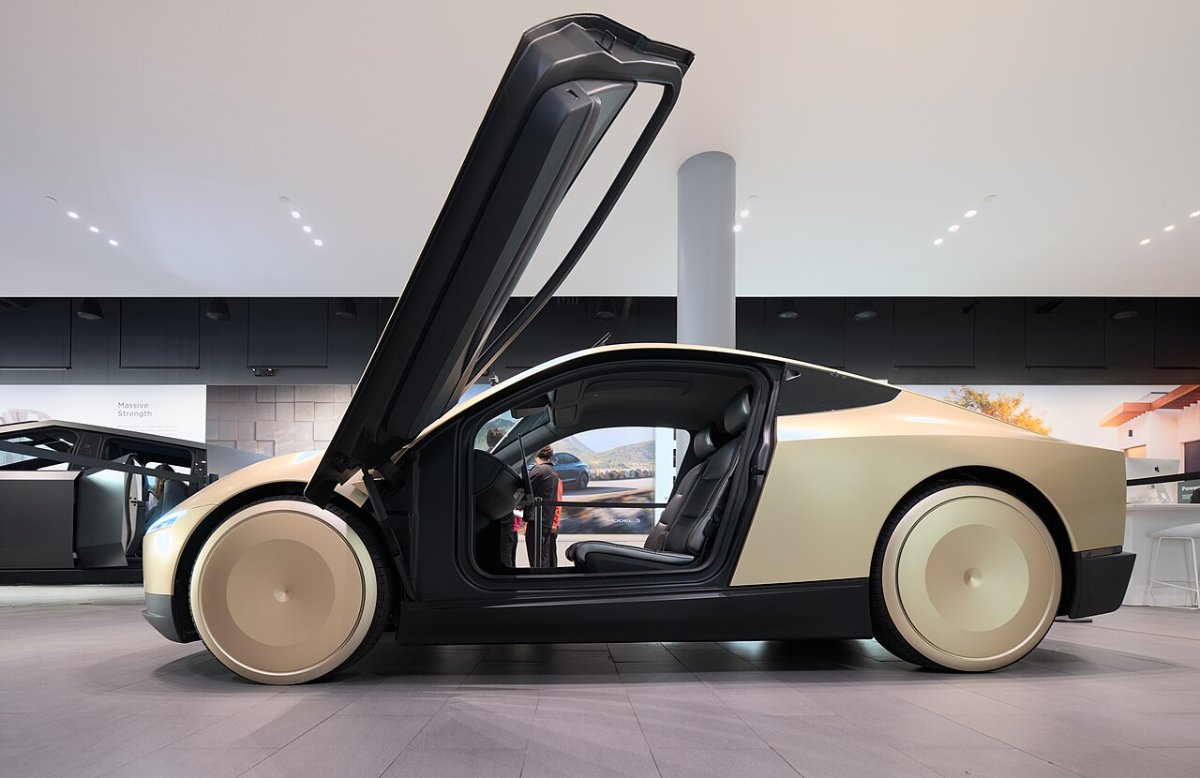
The Cybercab is Tesla’s first purpose-built autonomous vehicle — a two-seat electric robotaxi with no steering wheel, no brake pedal, no accelerator pedal, and no rearview mirrors. It’s a small, gold-coloured two-door with a liftback design, running on a version of Tesla’s Full Self-Driving software with no human control option inside the cabin.
Tesla invited a small group of shareholders and friendly influencers to the Austin launch event — which was not livestreamed and involved no public remarks from Musk, who was absent. Guests reportedly signed NDAs before riding. After the private event, rides opened more broadly through Tesla’s Robotaxi app. As of this morning, Tesla has 420 autonomous vehicles registered in Texas, including 45 confirmed Cybercab vehicles.
The rides are currently geo-fenced to specific areas of Austin. Tesla has also expanded to Dallas and Houston with earlier Robotaxi service using Model Y vehicles. The Cybercab is not being sold to consumers — it operates only within Tesla’s own fleet for now.
The Legal Problem: No Pedals, No Mirrors, No Exemption
Here is the core issue NHTSA is investigating. Federal Motor Vehicle Safety Standards require passenger vehicles to have permanently attached conventional manual controls — including a brake pedal, gas pedal, steering wheel, and rearview mirrors. The Cybercab has none of these.
Tesla’s answer to this problem was to decide that certain federal safety standards simply don’t apply to a vehicle designed to be driven only by software, never by a human. Tesla VP of Vehicle Engineering Lars Moravy said the Cybercab was designed to comply with all applicable federal standards from the outset — allowing the company to self-certify it like any other vehicle, without seeking a special exemption.
NHTSA’s response, filed late yesterday: the agency wants to see the technical data and process behind that self-certification. Specifically, it wants to understand on what basis Tesla determined that the missing controls don’t trigger the relevant standards.
The investigation is numbered AQ26002 and classified as an Open Audit Query from NHTSA’s Office of Defects Investigation. It is not a recall or a stop-drive order — Tesla can continue deploying the Cybercab while the probe proceeds. But the investigation signals that NHTSA is not prepared to simply accept Tesla’s self-certification at face value.
Why This Is Different From Waymo
Alphabet’s Waymo also operates purpose-built autonomous vehicles without human controls in multiple US cities — so the question of why Tesla faces scrutiny while Waymo does not is a fair one.
The answer is process. Waymo sought and obtained formal NHTSA exemptions for its vehicles before deploying them commercially. Amazon’s Zoox did the same. Both companies went through the regulatory process designed specifically for vehicles that don’t meet standard safety requirements because they’re designed to be fully autonomous.
Tesla skipped that process. It self-certified instead, arguing its vehicles are compliant with all applicable standards. If that argument is legally correct, the probe ends without consequence. If it isn’t — if NHTSA determines that the Cybercab should have sought an exemption rather than self-certifying — Tesla could be required to halt deployment or seek the exemption retroactively.
The Department of Transportation has proposed updating federal safety rules to explicitly allow autonomous vehicles without manual controls — but that proposed rule has not yet been finalised. Tesla is operating in the gap between the proposed policy and the current law.
How It Compares to Waymo’s Market Position
The launch arrives as Tesla works to establish itself in a robotaxi market where Waymo has a substantial lead. Waymo currently offers paid rides in 14 cities with approximately 4,000 autonomous vehicles in service — a fleet built over years of methodical, regulatory-compliant expansion.
Tesla has the advantage of volume. Its FSD software has been training on real-world driving data from millions of customer vehicles for years — giving it a massive dataset advantage over most competitors. The question is whether that data advantage translates into a vehicle that is actually safer than Waymo’s in real-world deployment conditions.
Musk has said material Cybercab revenue is unlikely before at least 2027. The federal probe, the lack of a public launch event, and the NDA requirement for early riders suggest Tesla itself understands this is a cautious rollout — not the mass-market disruption moment the hype suggested it would be. For more on the autonomous vehicle race, see our coverage of Uber’s $10 billion robotaxi expansion and our overview of 10 emerging technologies transforming the future.
Read more tech related articles here.
Sources: NHTSA, TechCrunch